
Views: 0 Author: Site Editor Publish Time: 2025-10-29 Origin: Site


Aluminium Composite Panels — or ACPs — are changing the way architects and homeowners approach modern design. They’re sleek, versatile, and built to last. But one question comes up again and again:
“Is aluminium composite panel waterproof?”
It’s a fair question, especially when you plan to use ACP in kitchens, bathrooms, or outdoor facades. Nobody wants warped walls, peeling corners, or dull finishes caused by moisture damage.
The truth is, ACP sheets are water-resistant — not fully waterproof. That means they can handle rain, humidity, and cleaning without issue, but they shouldn’t be submerged or exposed to constant water contact.
In this detailed guide, we’ll explore how waterproof ACP really is, what affects its performance, and how to use it smartly to avoid common moisture-related problems.
Before we dive into waterproofing, let’s understand what ACP actually is.
An Aluminium Composite Panel is a layered material made of:
Two thin aluminium sheets
A non-aluminium core, often made of polyethylene (PE) or a fire-retardant mineral core (FR)
This sandwich-style structure makes ACP both lightweight and strong.
You’ll find ACP used everywhere — building exteriors, interiors, signage, kitchen panels, and ceilings — because it’s durable, smooth, and easy to install.
Here’s a quick look at its basic composition:
| Layer | Material Used | Function |
|---|---|---|
| Front Face | Aluminum Sheet | Decorative and protective surface |
| Core | PE or FR (Mineral Core) | Adds rigidity and insulation |
| Back Face | Aluminum Sheet | Balances the panel structure |
| Coating | PVDF / Polyester Paint | Protects against moisture and UV rays |
This design helps ACP resist corrosion, weather, and yes — even water exposure to a large degree.
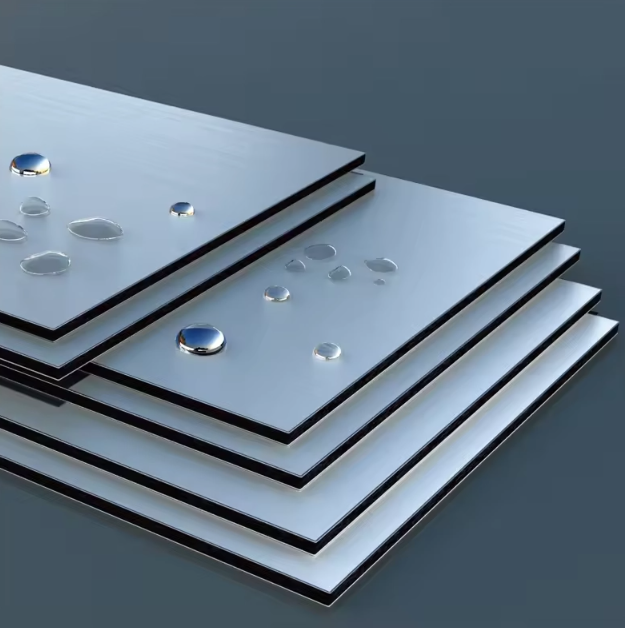
When people ask, “Is aluminium composite panel waterproof?” — they usually mean, can it handle water, humidity, and weather without falling apart? The short answer: ACP sheets are water-resistant, not completely waterproof. They’re built to resist rain, splashes, and moisture in the air, but constant exposure to water or steam can still cause damage over time.
Waterproof means a material blocks out water completely — even if it’s submerged.
Water-resistant means it can keep out water to a certain degree, but not forever.
ACP falls into the second category. It stands up well to rain, cleaning, and humidity, yet it’s not designed for areas like showers or saunas where water lingers for hours.
ACP panels have multiple layers working together to resist moisture. Here’s a quick look:
| Layer | Material | Function |
|---|---|---|
| Outer Skin | Aluminium Sheet | Blocks external moisture and protects against corrosion |
| Core | Polyethylene (PE) or Fire-Retardant Mineral | Adds rigidity and absorbs minimal moisture |
| Coating | PVDF or Polyester Paint | Provides a waterproof, UV-resistant finish |
Each layer helps create a tight, protective shell that keeps your kitchen walls, cladding, or ceilings safe from splashes and condensation.
Aluminium Skins Seal the Surface
The thin metal sheets act like a raincoat — they stop water droplets from seeping in.
Protective Coatings Add a Barrier
High-quality PVDF coatings make the surface slippery and prevent oxidation.
The Core Isn’t Fully Impermeable
The inner core resists water but can weaken under long exposure. Adhesives may loosen if water sneaks in through unsealed edges.
Improper Installation Causes Leaks
Gaps or unsealed joints allow water to enter, leading to bubbling or peeling over time.
ACP performs great in places exposed to occasional moisture, like:
Kitchen backsplashes
Exterior facades
Ceilings and corridors
Covered balconies
Avoid using it in wet zones such as:
Showers
Steam rooms
Constantly damp basements
Think of your ACP panel like a rain jacket. It can handle drizzle, even a downpour, if sealed properly. But if you stand in a swimming pool wearing it all day, water eventually seeps in. That’s exactly how ACP behaves — strong under splashes, vulnerable under saturation.
Seal all joints and corners using silicone-based sealant.
Pick FR-core ACP — it’s denser and more moisture-tolerant than PE core.
Use professional installers to avoid hidden gaps.
Keep panels clean to prevent water-trapping dust buildup.
| Material | Waterproof Level | Suitable For |
|---|---|---|
| ACP Sheet | Water-Resistant | Indoor & semi-outdoor use |
| PVC Panel | Fully Waterproof | Bathrooms, ceilings |
| HPL Sheet | Highly Water-Resistant | Facades, kitchens |
| Wood / MDF | Low Resistance | Dry interiors only |
ACP sits in the middle ground — durable enough for rain and humidity, but not invincible against standing water.
When it rains, buildings face constant exposure to moisture, humidity, and changing temperatures. That’s where aluminium composite panels (ACP) really shine. Their structure and coating make them naturally resistant to water damage. They don’t soak up moisture like wood, and they don’t rust easily like untreated metal. Let’s look at how they do it — layer by layer and feature by feature.
The first line of defense is the outer aluminium layer. It acts like a waterproof shield that blocks rain, splashes, and condensation.
Each sheet is coated using PVDF (polyvinylidene fluoride) or polyester paint, giving it a non-porous finish. This smooth coating helps water slide off instead of seeping in.
Key features of this layer:
Prevents oxidation and corrosion.
Protects color and gloss under heavy rainfall.
Keeps the surface looking new even in damp climates.
Quick tip:
Use darker, matte finishes for outdoor panels — they’re less likely to show water spots or fading.
Inside every ACP lies a sandwich core — made from polyethylene (PE) or a fire-retardant (FR) mineral blend. This layer provides stiffness and insulation while resisting moisture absorption.
Think of it as the “cushion” between two waterproof shields. It doesn’t soak in water like MDF or plywood. Even if small amounts of moisture reach it, the core’s density stops water from spreading deeper.
| Core Type | Material Composition | Moisture Protection Level | Best Use |
|---|---|---|---|
| PE Core | Polyethylene Plastic | Moderate | Indoor use (kitchens, ceilings) |
| FR Core | Mineral-filled Fire Retardant | High | Exterior walls, semi-wet areas |
Even the best panels can fail if edges are left open. That’s why proper sealing is essential.
During installation, professionals use silicone or polymer-based sealants around joints and corners. These act as invisible barriers against water infiltration.
When installed right:
Rainwater runs off smoothly instead of pooling.
No gaps form between panels.
Adhesive layers stay strong for years.
Common mistake: Many DIY installers forget to seal edges — this causes bubbling or peeling later.
ACP panels go through several coating stages before they reach your walls. These coatings improve not just color but also resistance to UV light, acid rain, and moisture.
The standard PVDF coating process includes:
Chemical cleaning of the aluminium coil to remove oils.
Primer layer to improve adhesion.
Fluorocarbon or polyester topcoat for water resistance.
Baking and curing at high temperatures to lock the finish.
This process seals micro-pores on the aluminium surface, making it smooth and non-reactive. That’s why water or humidity can’t penetrate easily.
ACP panels don’t trap dirt or algae, which can hold moisture. A simple wipe using mild detergent and water keeps them clean.
By preventing dust or mold from accumulating, you also prevent moisture pockets that could weaken the material over time.
Maintenance checklist:
Clean every 3–6 months (more often in coastal or humid areas).
Avoid harsh chemicals or rough scrubbing pads.
Inspect sealant lines yearly to maintain tight joints.
Good ACP cladding systems include drainage channels and ventilation gaps behind panels. This allows air to circulate and lets trapped moisture escape.
Even when water finds its way in, it doesn’t stay long enough to cause harm.
Proper airflow = no condensation = longer life for your ACP panels.
| Defense Mechanism | Description | Function |
|---|---|---|
| Aluminium Layers | Non-porous metal sheets | Block rain, humidity |
| PVDF/Polyester Coating | Weatherproof outer film | Prevent corrosion, fading |
| Core (PE or FR) | Dense inner structure | Stops water spread |
| Sealants at Joints | Silicone or polymer lining | Close gaps, prevent leaks |
| Ventilation Design | Built-in airflow system | Avoid condensation buildup |
Let’s clear up a few myths that often lead to installation problems:
“ACP panels are 100% waterproof.”
– False. ACP is water-resistant, not waterproof. Constant submersion or exposure to steam can damage the adhesive core.
“ACP works perfectly in any wet area.”
– Not always. Avoid direct water environments like showers unless properly sealed and backed.
“All ACP brands perform the same.”
– Quality varies widely. Premium ACPs from trusted brands have better coatings, UV protection, and adhesive strength.
“Once installed, ACP needs no maintenance.”
– Wrong again. Occasional cleaning prevents dirt from breaking down the waterproof coating.
ACP’s water resistance makes it one of the most reliable materials for both interior and exterior design. Here’s where it truly excels:
Building Facades – Handles rain, dust, and temperature fluctuations effortlessly.
Kitchen Cabinets and Backsplashes – Stands up to moisture and cleaning chemicals.
Commercial Interiors – Keeps its finish under frequent cleaning cycles.
Public Infrastructure – Airports, metro stations, and bus terminals prefer ACP for low maintenance and weather resistance.
Outdoor Signage and Billboards – Survives sunlight, wind, and rain without fading.
Best Use Environments: Exterior walls, corridors, covered balconies, and interior partitions.
Avoid In: Wet rooms, pools, or direct water spray zones.
1. Is aluminium composite panel waterproof or just water-resistant?
It’s water-resistant — it repels water but isn’t designed for constant submersion.
2. Can ACP sheets be used in bathrooms?
Only in well-ventilated or semi-dry zones with waterproof backing. Avoid direct water exposure.
3. Will ACP rust or corrode?
No. Aluminium’s natural oxide layer and protective coating prevent corrosion.
4. How long do ACP panels last outdoors?
Typically 10–15 years, depending on coating quality and maintenance.
5. How can I make ACP fully waterproof?
Seal edges properly, use waterproof adhesives, and maintain regular inspections.
6. Which is better for wet areas: ACP or PVC?
PVC is fully waterproof, but ACP offers superior looks and structure for semi-wet spaces.
7. What’s the difference between PE and FR core in waterproofing?
FR cores perform better under humidity and are safer against fire hazards.
So, is aluminium composite panel waterproof?
Not entirely — but it’s impressively water-resistant and perfectly suited for most environments when installed the right way.
With its aluminium layers, sealed core, and protective coatings, ACP can easily handle rain, humidity, and cleaning — making it a trusted choice for modern architecture.
Whether you’re designing a sleek kitchen, an outdoor signboard, or a building facade, ACP panels deliver the durability, beauty, and weather resistance you need.
When installed and maintained correctly, they’ll keep your space looking clean, modern, and waterproof for many years to come.


