
Views: 0 Author: Site Editor Publish Time: 2026-09-10 Origin: Site


Selecting the correct core material for architectural cladding is a strict life-safety and liability decision. Modern construction faces rigorous regulatory shifts worldwide regarding facade combustibility. Architects, specifiers, and developers must balance strict fire code compliance with project structural weight limits and fabrication complexity. Aluminum Composite Panels feature different core types that dictate how a building reacts during a fire event. This guide provides a technical evaluation framework for three primary core categories. We will examine PE (Polyethylene), FR (Fire-Retardant), and A2 (Non-Combustible) cores. We will help you determine the exact core required for specific project parameters. You will learn how to identify materials, understand compliance risks, and specify the right panel for your next facade project without compromising safety or structural integrity.
PE Cores are highly combustible and largely restricted to low-rise, signage, or non-architectural applications due to stringent modern building codes.
FR Cores offer a balance of mineral fillers and polymer binders, suitable for most mid-rise commercial applications and standard fire-resistance requirements.
A2 Cores contain over 90% non-combustible mineral content, representing the highest safety standard required for high-rises, hospitals, and high-risk facilities.
Table of Contents
The anatomy of an ACP relies on a highly engineered sandwich structure. Manufacturers bond two thin aluminum sheets to a central core material. This continuous bonding process creates a rigid, flat, and lightweight panel. The aluminum skins provide the necessary weather resistance. They protect the building envelope from moisture, wind, and UV degradation. The skins also provide structural rigidity for the facade. However, the core material remains the most critical component for safety. The core dictates the panel's behavior under thermal stress. It determines how the panel reacts to direct flame exposure.
Overall panel thickness typically ranges from 3mm to 6mm. The ratio of the aluminum skin to the core material impacts several performance metrics. A thicker core increases the total fire load if the material is combustible. It also affects structural rigidity and thermal performance. Standard architectural panels usually feature 0.5mm aluminum skins with a 3mm core. This creates a total panel thickness of 4mm. Adjusting this ratio changes the panel's weight and spanning capabilities. For instance, a 6mm panel with 0.5mm skins offers greater wind load resistance but requires modified extrusion profiles for installation.
Most architectural applications utilize a routed and folded cassette system. Fabricators route a V-groove into the back of the panel, leaving the front aluminum skin intact. They then fold the edges to create a pan or cassette. This cassette mounts to the aluminum sub-framing using specialized clips. The core material must withstand this folding process without cracking or delaminating. If the core is too brittle, the fold will fail, compromising the panel's structural integrity.
Visual identification of the core material is possible but requires caution. Major industry brands use standard visual cues during manufacturing. Glossy black cores usually indicate a PE composition. Light grey cores often signify an FR composition. Stark white or very light grey cores typically represent an A2 rating. You must treat visual inspection as a preliminary check only. Visual cues are never a substitute for certified testing documentation. Manufacturers can alter core colors. Always demand full certification paperwork before installation. I have seen sites where black-dyed FR cores caused massive confusion for inspectors.
The PE core consists of a 100% thermoplastic polyethylene makeup. This material offers excellent flexibility and low weight. It makes the panels incredibly easy to cut, route, and fold. When you route a PE core, the swarf comes off in long, continuous plastic ribbons. The router bits stay cool, and you can push CNC machines at maximum feed rates. This ease of fabrication is why installers historically favored it.
However, polyethylene possesses a very high calorific value. It has a heat of combustion around 45 MJ/kg, which is comparable to gasoline or diesel fuel. When a fire breaches the exterior aluminum skin, the PE core ignites rapidly. The material melts, creating a flowing pool of burning plastic. This burning liquid drips down the facade, igniting lower floors and debris. Simultaneously, the flames race upward through the panel cavity. This chimney effect draws oxygen into the cavity, feeding the fire and causing rapid vertical flame spread. Firefighters find these facade fires incredibly difficult to extinguish because the burning core is shielded behind the outer aluminum skin.
Modern building codes heavily restrict PE core applications. You can safely specify PE panels for single-story commercial buildings. They work well for interior partitions where local fire codes permit combustible materials. The sign and display industry relies heavily on PE cores. Corporate signage, gas station canopies, and temporary structures often utilize these panels. Their lightweight nature and ease of fabrication make them ideal for these low-risk environments. You should avoid using PE panels on multi-story occupied structures entirely.
Jurisdictions worldwide have implemented widespread bans on PE cores for high-rise facades. The UK, Australia, and many parts of the US strictly prohibit their use above certain heights. Specifying PE cores in borderline applications carries severe liability risks. Property insurance implications are massive. Insurers often refuse to underwrite buildings clad in PE panels. Architects face potential legal liabilities if they specify non-compliant materials. You must understand local height restrictions before considering a PE core.
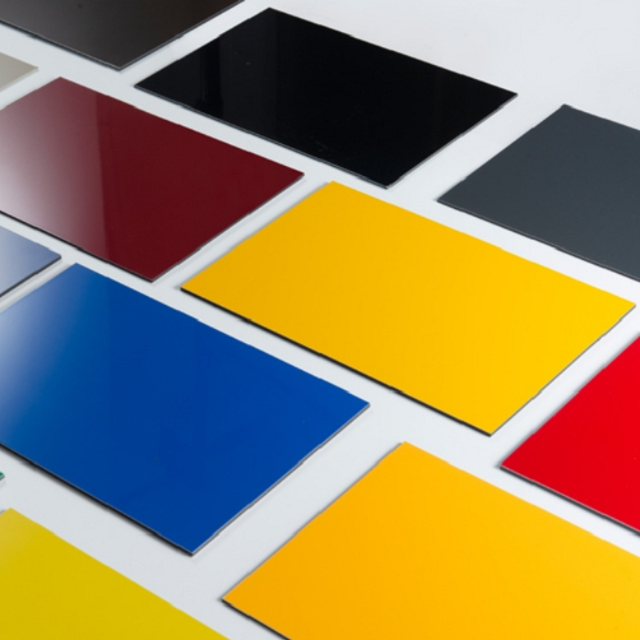
The FR core provides a highly effective middle ground for architectural cladding. Manufacturers create a specific blend of materials to achieve fire resistance. The composition typically includes 70-80% inorganic mineral fillers. Aluminum trihydroxide (ATH) is the most common mineral filler used. The remaining 20-30% consists of a polymer binder. This polymer holds the mineral dust together. It maintains the panel's structural integrity and flexibility. The precise ratio determines the panel's exact fire rating and fabrication characteristics.
The mineral content in an FR core reacts dynamically to fire. Aluminum trihydroxide is a non-toxic, halogen-free powder. When the panel temperature reaches approximately 220°C (428°F), the ATH begins to decompose. This endothermic decomposition absorbs a massive amount of heat energy. It releases water molecules trapped within the mineral structure. This water turns to steam, diluting combustible gases and cooling the immediate area.
The remaining material forms a protective char layer. This char insulates the deeper core material from the heat source. While the polymer binder will eventually burn, the ATH significantly delays ignition and slows the overall heat release rate. You must understand that FR means fire-retardant, not fireproof. The material slows flame spread significantly. It is self-extinguishing when you remove the primary heat source. It will not sustain a flame on its own.
FR panels serve as the standard choice for most commercial applications. You can specify them for mid-rise residential developments. They are standard for commercial cladding and architectural facades. Local building codes dictate the specific height limits for FR panels. Many regions permit FR cores up to 15 or 25 meters. You must verify these height restrictions with local authorities. FR cores provide excellent safety margins for buildings within these height parameters. They balance safety, weight, and fabrication ease perfectly.
The A2 core represents the pinnacle of facade safety technology. The material composition is exceptionally stringent. It contains over 90% non-combustible mineral filler. Manufacturers use a minimal synthetic binder purely for structural cohesion. This binder ensures the core bonds properly to the aluminum skins. The massive mineral volume makes the core dense and heavy. It removes almost all combustible potential from the panel. This composition requires advanced manufacturing techniques to maintain panel flatness and bond strength.
An A2 rating guarantees superior fire performance. The EN 13501-1 classification system provides a detailed breakdown of material performance. The "A2" designation means the material is non-combustible under standard testing conditions. The "s1" rating indicates the lowest possible smoke emission levels. Smoke inhalation causes the majority of fire-related casualties, making this metric critical for high-occupancy buildings. The "d0" rating confirms the panel produces zero flaming droplets or particles. This prevents the fire from spreading downward to lower levels or endangering escaping occupants and first responders.
The fire simply cannot propagate through the core material. The high density offers secondary environmental benefits as well. A2 panels provide enhanced durability against extreme weather. They resist harsh sun and UV degradation better than standard panels. They also handle gusting wind loads effectively due to their superior core density.
Building codes mandate A2 cores for high-risk applications. You must specify A2 panels for high-rise buildings. This typically includes any structure above 18 to 25 meters, depending on the jurisdiction. Hospitals require A2 panels to protect vulnerable occupants. Schools and educational facilities demand this highest safety standard. Airports and high-occupancy public infrastructure also mandate non-combustible cladding. Whenever evacuation times are lengthy, A2 cores are the only acceptable choice. They provide maximum protection for life and property.

Comparing how each core aligns with major testing standards is essential when evaluating PE vs FR vs A2 ACP options. In the US, NFPA 285 evaluates the fire propagation characteristics of exterior wall assemblies. PE panels fail this test entirely. FR panels can pass depending on the specific wall assembly design. A2 panels pass easily. In Europe, EN 13501-1 classifies materials based on combustibility. PE receives a low rating. FR typically achieves B-s1, d0. A2 achieves A2-s1, d0. In Australia, AS 1530.1 tests combustibility. Global property insurance relies on FM Approvals, like FM 4880. You must require full-scale assembly test data from manufacturers. Component tests alone do not guarantee real-world compliance.
Project budgets directly influence core selection. We use the PE core as the baseline for relative cost comparison. FR cores require a moderate premium over PE. A2 cores command the highest premium due to complex manufacturing. You must analyze the trade-off between upfront material costs and downstream savings. FR and A2 panels require a higher initial investment. However, their advantages in securing favorable insurance policies are unmatched. Specifying compliant panels avoids future mandatory recladding. This makes FR and A2 panels the only viable choices for long-term commercial projects.
Fabrication methods vary significantly between core types. PE cores are soft and machine easily. You can route, fold, and cut them with standard woodworking tools. FR and A2 cores present different challenges. When cutting FR panels, you will notice a distinct chalky dust instead of plastic ribbons. The router bits wear out faster. You need to adjust your CNC feed rates down by about 20% compared to PE.
Processing A2 panels requires a complete overhaul of standard fabrication techniques. Standard carbide router bits will dull after just a few sheets of A2 material. Fabricators must invest in polycrystalline diamond (PCD) tooling. Even with diamond bits, you must reduce spindle speeds and lower the feed rates to prevent bit burnout. The dense mineral core generates fine, abrasive dust during routing. Upgraded dust extraction systems are mandatory to protect CNC machinery and maintain a safe working environment for operators. The folding process also requires larger bending radii to prevent the dense core from fracturing at the seam.
Weight differences impact structural engineering calculations. A2 panels are significantly heavier than PE panels. Specifying A2 requires more robust sub-framing. You need heavier aluminum extrusions to support the dead load. Bracket spacing must be tighter. Fastener pull-out strength requires careful calculation. Thermal expansion rates also differ. PE cores expand and contract significantly under harsh sun and temperature fluctuations. Mineral-heavy FR and A2 cores exhibit much lower thermal expansion. This impacts joint design and sealant selection. You must calculate expansion gaps accurately based on the specific core material.
Calculate the total dead load of the A2 panels against the exterior wall framing capacity.
Adjust bracket spacing to accommodate the increased weight of mineral-heavy cores.
Specify heavy-duty aluminum extrusions rather than standard lightweight profiles.
Verify fastener pull-out strength with on-site pull tests before full installation.
Design expansion joints based on the specific thermal movement data of the chosen core.
Feature | PE Core | FR Core | A2 Core |
|---|---|---|---|
Mineral Content | 0% | 70-80% | >90% |
Combustibility | Highly Combustible | Fire-Retardant | Non-Combustible |
Primary Application | Signage, Low-Rise | Mid-Rise Commercial | High-Rise, Hospitals |
CNC Tooling Wear | Low | Moderate | High (Requires Special Bits) |
Relative Weight | Lightest | Medium | Heaviest |
The construction industry faces significant supply chain risks regarding panel substitution. A common issue is the bait and switch tactic. Unscrupulous contractors might substitute PE panels for specified FR or A2 panels on site. They do this to cut material costs and increase profit margins. This creates massive liability and safety hazards. You must implement strict mitigation tactics. Require batch testing documentation for all panel deliveries. Check the core color upon delivery as a preliminary measure. Conduct independent lab sampling for large-scale projects. Cut random panels on site to verify the core material matches the approved submittals.
You must never evaluate the ACP core in isolation. Fire codes govern the entire exterior wall assembly. The wall assembly includes insulation, weather barriers, cavity barriers, and aluminum framing. You must evaluate all these components as a cohesive fire-rated system. A non-combustible A2 panel will not stop a fire if the cavity insulation is highly flammable. Proper cavity fire barriers must be installed at every floor slab.
The NFPA 285 test evaluates the entire wall assembly, not just the cladding. The test utilizes a two-story wall mockup with a window opening. Technicians ignite a gas burner inside the first-floor room and another burner at the window header. This simulates a flashover fire exiting a window and attacking the exterior facade. Thermocouples measure temperature propagation throughout the wall cavity and across the exterior surface. To pass, the assembly must prevent flame spread from reaching the second-story limits or the lateral edges of the mockup. If you change the insulation type, the weather barrier brand, or the cavity depth, you must retest the entire assembly. Real-world compliance depends on system-level performance, not just panel specifications.
The choice between different ACP cores is a strict compliance and risk-management calculation. Your selection directly impacts building safety and legal liability. Follow a clear shortlisting logic for your projects. Choose PE only for signage or low-rise, low-risk applications. Choose FR for mid-rise commercial projects where standard fire-retardant codes apply. Choose A2 for high-rises, institutional buildings, and maximum liability protection.
Take the following actions to ensure your next facade project meets all safety and compliance standards:
Consult with a certified fire engineer early in the design phase to determine exact wall assembly requirements.
Review local building codes specifically for height restrictions regarding combustible cladding before specifying materials.
Request certified assembly testing data from panel manufacturers before finalizing any specification.
Implement strict on-site material verification protocols to prevent unauthorized panel substitution during construction.
A: Manufacturers often use color coding for core identification. PE cores are typically glossy black. FR cores usually appear light grey. A2 cores are stark white or very light grey. However, visual inspection is only a preliminary check. You must always verify the core material through certified manufacturer testing documentation.
A: PE cores are not entirely banned, but their use is heavily restricted. Most jurisdictions ban PE panels on high-rise buildings and multi-story occupied structures. They remain legal and appropriate for ground-level signage, temporary structures, and specific low-risk applications where local fire codes permit combustible materials.
A: An A2 rating indicates the panel is classified as non-combustible or of limited combustibility. Under EN 13501-1, it means the core contains over 90% mineral filler. It will not contribute significantly to fire growth, produces minimal smoke, and generates zero flaming droplets during a fire event.
A: The legality of FR panels on high-rises depends entirely on local building codes. Many jurisdictions restrict FR panels to mid-rise buildings, typically up to 15 or 25 meters. Above those heights, strict codes usually mandate A2 non-combustible panels. Always consult local fire authorities for specific height limits.
A: Panel thickness affects the total volume of core material. In combustible PE panels, a thicker core increases the total fire load and fuel available. In FR and A2 panels, a thicker core provides more mineral content, which can enhance structural rigidity but does not fundamentally change the combustibility classification.
A: PE cores are soft and easily machined with standard router bits. FR and A2 cores contain high volumes of abrasive mineral dust. This dense mineral content causes rapid wear on standard tools. Fabricating FR and A2 panels requires specialized diamond-tipped CNC router bits and adjusted machine feed rates.
A: No building material is entirely fireproof under extreme conditions. A2 panels are classified as non-combustible. They will not fuel a fire or spread flames. However, under sustained, extreme heat, the thin aluminum skins can melt, and the minimal synthetic binder in the core can degrade.


