You are here: Home » Blogs » Differences between ACM And ACP

Differences between ACM And ACP

Views: 0     Author: Site Editor     Publish Time: 2025-10-29      Origin: Site

Inquire

facebook sharing button
twitter sharing button
line sharing button
wechat sharing button
linkedin sharing button
pinterest sharing button
whatsapp sharing button
kakao sharing button
snapchat sharing button
telegram sharing button
sharethis sharing button

1. Introduction: The Modern Face of Architecture and Design

In today’s fast-evolving construction and design world, aluminum composite material panels have become the go-to solution for architects, builders, and designers seeking the perfect balance of beauty, durability, and cost-efficiency.

Among the most trusted manufacturers in this field, MC Bond stands out as a global supplier of premium aluminum composite panels (ACP) and aluminum composite materials (ACM).

With advanced production technology and a commitment to innovation, MC Bond provides solutions for building façades, signage, and decorative applications — all engineered for performance, aesthetics, and sustainability.

2、Understanding the Terms: ACM vs ACP

企业微信截图_20251020160832

Ever heard someone say ACM and someone else say ACP — and both mean the same thing? It’s easy to get confused. These two terms sound alike, but they describe slightly different things in the world of aluminum composite materials. Let’s break it down simply.

What ACM Really Means

ACM stands for Aluminum Composite Material.
It’s the broad term used to describe the technology behind these lightweight panels.

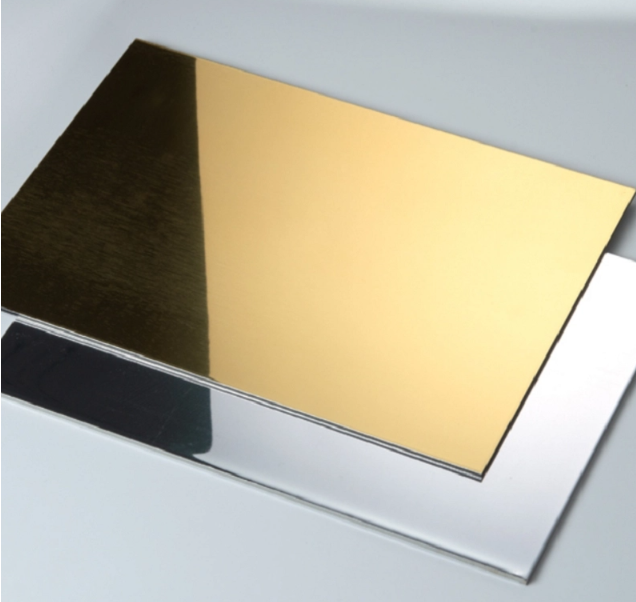
ACM panels consist of two thin aluminum sheets bonded to a non-aluminum core, usually polyethylene (PE) or a mineral-filled thermoplastic.
They’re known for being light, flat, and versatile.

You’ll see ACM mostly used in:

  • Signage and branding displays

  • Interior design features

  • Retail fixtures and exhibitions

  • POP (point-of-purchase) structures

ACM’s strength lies in printability and surface finish. It’s smooth, easy to cut, and ideal for projects where looks matter more than fire ratings.

What ACP Refers To

ACP stands for Aluminum Composite Panel.
It’s a specific type of ACM — engineered mainly for construction and architectural cladding.

ACP panels share the same sandwich-style structure as ACM but often feature enhanced cores, such as fire-retardant (FR) or A2 mineral cores.
These provide superior safety and structural rigidity.

Common ACP applications include:

  • Building façades and curtain walls

  • Ventilated exterior systems

  • Column covers and soffits

  • Large-scale renovation projects

Architects choose ACP for its weather resistance, fire performance, and long lifespan.

ACM vs ACP — The Key Differences

Here’s a quick way to see how they compare:

Feature ACM (Aluminum Composite Material) ACP (Aluminum Composite Panel)
Definition Broad material category Architectural-grade composite panel
Core Type PE or thermoplastic FR or mineral-filled (A2/B1)
Main Use Signage, branding, interiors Façades, cladding, architecture
Surface Finish Gloss, matte, printable PVDF, anodized, nano-coated
Fire Rating Standard (non-FR) Fire-rated (Class A / B1 / A2)
Durability Moderate, indoor/outdoor High, long-term outdoor
Typical Thickness 2–4 mm 3–6 mm or more
Cost Lower Higher
Example Products DIBOND®, Alumanate STACBOND®, MC Bond FR ACP

How to Tell Them Apart

  • If it’s for advertising or indoor design, it’s likely ACM.

  • If it’s for buildings, façades, or outdoor projects, it’s ACP.

  • If it must meet fire or building codes, it’s definitely ACP.

Think of ACM as the category, and ACP as the professional-grade version made for construction.
They share the same DNA — just tuned for different jobs.

3、MC Bond: A Global Leader in Aluminum Composite Panels

Headquartered in Zhejiang, China, MC Bond (Zhejiang Kangzhan New Materials Co., Ltd.) has become a trusted manufacturer and exporter of high-quality ACM and ACP panels to markets worldwide.

MC Bond’s products combine advanced coating technologies, fire-resistant cores, and customized finishes, making them suitable for architectural façades, interior decoration, signage, and branding projects.

MC Bond Product Series Include:

  • PVDF ACP for Cladding – for durable, weather-resistant building façades

  • A2 / B1 Fire-Resistant ACP – compliant with international fire standards

  • ACP for Advertising and Signage – lightweight and printable surfaces

  • Anodized ACP – metallic finish with excellent color retention

  • Nano Painting ACP – self-cleaning, stain-resistant panels

  • PVC Filmed ACP – cost-effective decorative applications

Each series is designed to deliver quality, versatility, and performance — ensuring that MC Bond panels meet the diverse needs of global customers.

4、Advantages of MC Bond ACM / ACP Panels

When it comes to choosing materials for construction, signage, or interior projects, MC Bond ACM / ACP panels stand out for their blend of beauty, strength, and practicality. They’re not just panels — they’re an all-in-one design and performance solution.

Lightweight Yet Remarkably Strong

MC Bond panels may feel light in your hands, but they’re built to last.
Each one weighs about half as much as solid aluminum, yet it resists impact, wind pressure, and bending.
That means less structural load, faster installation, and lower transport costs — all without losing durability.

Weather Resistance You Can Trust

Whether it’s blazing sunlight or heavy rain, these panels stay smooth and vibrant.
The PVDF coating protects the aluminum from corrosion, UV fading, and harsh outdoor conditions.
For areas with dust or humidity, Nano-coated ACP adds an extra layer that repels dirt and water, keeping buildings clean longer.

Flexible for Design and Fabrication

Architects and sign makers love how easy it is to shape MC Bond panels.
They can be cut, bent, folded, routed, or even curved using simple tools.
This flexibility allows creative designs — wavy façades, bold curves, or complex angles — to come alive without cracking or peeling.

Design options include:

  • Metallic, matte, glossy, or mirror finishes

  • Woodgrain and marble effects

  • Custom colors for corporate branding

Fire Safety and Code Compliance

MC Bond’s A2 and B1 Fire-Resistant ACP panels provide excellent flame retardancy.
They meet global building standards such as EN 13501-1 and ASTM E-84.
That makes them suitable for high-rise façades, public buildings, and commercial spaces where safety comes first.

Panel Type Core Composition Fire Rating Recommended Use
PE ACP Polyethylene Standard Indoor, signage, short-term outdoor
FR ACP Mineral-filled thermoplastic B1 Commercial façades
A2 ACP High mineral content A2 (non-combustible) High-rise, public architecture

Low Maintenance and Long Lifespan

Once installed, MC Bond panels don’t ask for much.
A quick wash restores their shine — no repainting or polishing needed.
The protective coatings prevent oxidation and chalking, ensuring colors stay crisp for 20 years or more.

Sustainability and Eco-Friendly Performance

MC Bond uses recyclable aluminum and low-VOC coatings, making its panels an environmentally responsible choice.
They also enhance a building’s thermal efficiency by acting as insulation layers in ventilated façades.
Less energy wasted, more comfort inside — that’s smart sustainability at work.

Cost-Effective Quality

Compared to stainless steel or solid aluminum, MC Bond ACM / ACP panels cost less to produce and install.
They deliver high-end aesthetics at an affordable price.
For contractors and distributors, that means better margins and satisfied clients — a win all around.

5、Frequently Asked Questions (FAQ)

Q1: Are ACM and ACP the same thing?
They share similar composition, but ACP usually refers to construction-grade panels, while ACM often refers to signage or display materials.

Q2: Can I print directly on MC Bond panels?
Yes — the Advertising & Signage ACP series features a smooth, printable surface suitable for UV, latex, and digital printing.

Q3: Are MC Bond panels fire-resistant?
Yes. The A2 / B1 FR ACP series meets global fire safety standards.

Q4: How long do MC Bond panels last?
With proper installation and care, PVDF-coated ACP panels can last 20–30 years in exterior conditions.

Q5: Are the panels eco-friendly?
Absolutely. All MC Bond ACM / ACP panels are fully recyclable and made with environmentally responsible materials.

6、 Why Global Distributors and Designers Choose MC Bond

  • Export Excellence: Supplying panels to over 100 countries worldwide

  • Advanced Manufacturing: Automated lines ensuring uniform coating and adhesion

  • Quality Assurance: ISO-certified production with consistent color and thickness

  • Customization: Wide range of sizes, colors, and finishes for any project

  • Reliable Partnership: Strong after-sales support and OEM / ODM services

MC Bond is not just a supplier — it’s a partner in delivering world-class design and construction solutions.

7、 Conclusion: Build Better with MC Bond Aluminum Composite Material Panels

Whether you’re designing a stunning building façade, an eye-catching storefront, or a modern interior, MC Bond aluminum composite material panels offer the perfect fusion of aesthetics, performance, and sustainability.

With a wide product range covering both ACM (signage, display) and ACP (architecture, cladding), MC Bond ensures that every customer — from global distributors to local contractors — finds a panel solution that fits perfectly.


Quick Links

Product Classification

Contact Information

WhatsApp: +8615868315794 
Tel: +86-576-83060887 
Phone: +86-15868315794
Address: No. 500, Xinzhong, Pingqiao Town, Tiantai, 317200, Zhejiang, China
Copryright 2025 Zhejiang Kangzhan New Materials Co. Ltd. All Rights Reserved | Sitemap | Privacy Policy