
Views: 0 Author: Site Editor Publish Time: 2026-09-10 Origin: Site


Selecting exterior cladding represents a high-stakes capital expenditure. Premature material failure creates severe financial and structural liabilities. Architects, developers, and facility managers must balance aesthetic flexibility with long-term weatherability. You face conflicting claims about how long exterior panels actually survive in harsh conditions without degrading, fading, or delaminating. A failing facade compromises building integrity and forces disruptive remediation. Determining the true aluminum composite panel lifespan requires looking past marketing brochures. You must evaluate core material science, coating technologies, environmental stressors, installation methodologies, and end-of-life sustainability. By understanding the engineering behind these cladding systems, stakeholders can specify materials that withstand decades of exposure. We will examine the exact factors that dictate panel survival and how to prevent premature degradation in exterior applications.
Baseline Longevity: High-quality Aluminum Composite Panels (ACPs) engineered for exterior use typically offer a functional lifespan of 20 to 30+ years when properly specified and installed.
Coating is Critical: The lifespan of the panel's visual integrity relies almost entirely on the surface finish; PVDF (Polyvinylidene Fluoride) coatings are mandatory for long-term UV and weather resistance outdoors.
Core Composition Matters: Fire-retardant (FR) or mineral-filled cores are not only critical for building code compliance but often provide superior structural stability under thermal stress compared to legacy polyethylene (PE) cores.
Installation Dictates Survival: The most common cause of premature ACP failure is not material degradation, but improper edge sealing, inadequate thermal expansion allowances, or galvanic corrosion from incompatible fasteners.
End-of-Life Value: Beyond their functional lifespan, Aluminum Composite Panels offer high sustainability value, as the aluminum skins are fully recyclable at the end of the building's lifecycle.
Table of Contents
Evaluating facade longevity requires differentiating between structural lifespan and aesthetic lifespan. A panel may remain firmly attached to the building for fifty years. However, if its surface finish chalks, fades, or peels within the first decade, it has failed its architectural purpose. True lifespan means the material maintains both physical integrity and visual intent under continuous environmental stress.
Structural integrity relies on specific performance metrics. Panels must resist regional wind loads without deflecting permanently. The adhesive bond between the aluminum skins and the core must prevent delamination. Impact resistance is also necessary to survive hail, flying debris, and maintenance activity. If the core separates from the skin, the panel loses its rigidity. This leads to buckling and eventual detachment from the framing system. We measure this through rigorous pull-off testing and wind-tunnel simulations during the mock-up phase.
Aesthetic durability is measured objectively using Delta-E (ΔE) color shift tolerances. This metric quantifies how much a color changes over time due to UV exposure. High-performance architectural coatings aim for a minimal ΔE shift over a 10-, 20-, and 30-year horizon. A shift of less than 5 units over 20 years is generally imperceptible to the naked eye. Gloss retention and the absence of chalking are equally necessary for maintaining the original design intent. Chalking happens when the resin degrades, leaving a white powder on the surface.
Compliance and safety regulations also dictate functional lifespan. A panel's lifespan is effectively zero if it must be removed prematurely due to failing updated fire safety regulations or building codes. Many older buildings are currently undergoing costly cladding replacements. The original materials technically survived the weather, but they failed modern non-combustibility standards. Future-proofing a facade means specifying materials that exceed current safety baselines.
Performance Category | Metric for Success | Testing Standard | Expected 30-Year Outcome (PVDF/FR) |
|---|---|---|---|
Structural Integrity | Wind load resistance, zero delamination | ASTM E330 | Panel remains flat, rigid, and securely fastened. |
Aesthetic Durability | Delta-E (ΔE) color shift < 5 | ASTM D2244 | Color remains vibrant; minimal gloss loss or chalking. |
Fire Compliance | Adherence to non-combustible codes | NFPA 285 / EN 13501-1 | Meets or exceeds modern building safety regulations. |
Weatherability | Zero moisture ingress at core | ASTM E331 | No internal freezing, expanding, or core degradation. |
The anatomy of Aluminum Composite Panels directly determines their outdoor survival. These systems are engineered sandwiches. They consist of two aluminum sheets bonded to a central core, finished with protective coatings. Each layer plays a specific role in resisting environmental degradation. Compromising on any single component drastically reduces the overall lifecycle of the facade.
The thickness of the aluminum skins dictates the panel's structural rigidity and dent resistance. Standard thicknesses typically range from 0.3mm to 0.5mm for architectural applications. A 0.3mm skin is generally reserved for low-rise buildings or interior applications. It is more susceptible to oil-canning and impact damage from hail. For permanent exterior facades, a 0.5mm skin is the industry standard. It provides the necessary stiffness to span larger distances between framing members without deflecting under wind pressure.
The specific aluminum alloy used also impacts inherent corrosion resistance before the coating is even applied. The 3000 series alloys contain manganese. They offer excellent workability and moderate strength. The 5000 series alloys contain magnesium. This provides superior tensile strength and exceptional resistance to marine environments. Specifying a 5000 series alloy adds a layer of defense against oxidation if the surface coating is ever scratched or compromised.
The core material acts as the structural web between the aluminum skins. Different core materials possess varying thermal expansion coefficients. Polyethylene (PE) cores expand and contract significantly under temperature fluctuations. This movement places continuous shear stress on the adhesive bonds. Over decades, extreme thermal cycling can cause PE-cored panels to delaminate. Mineral-filled cores offer greater dimensional stability. They expand at rates closer to the aluminum skins, reducing internal stress.
Regulatory shifts are driving the phase-out of highly combustible PE cores in exterior applications. Polyethylene is essentially a solid hydrocarbon. In a fire, it melts, ignites, and spreads flames rapidly up a facade. The industry has shifted toward mineral-filled Fire Retardant (FR) and A2 non-combustible cores. These cores contain aluminum trihydroxide or magnesium hydroxide. When exposed to heat, they release water vapor, cooling the panel and suppressing flame spread. Specifying FR or A2 cores is non-negotiable for modern building code compliance and long-term liability mitigation.

Core Type | Composition | Fire Performance | Dimensional Stability |
|---|---|---|---|
PE (Polyethylene) | 100% Thermoplastic Polymer | Highly Combustible (Banned in many regions) | High thermal expansion; prone to shear stress. |
FR (Fire Retardant) | ~70% Mineral Filler, 30% Polymer | Self-extinguishing; limits flame spread | Moderate thermal expansion; stable over decades. |
A2 (Non-Combustible) | ~90% Mineral Filler, 10% Binder | Non-combustible; highest safety rating | Excellent stability; closely matches aluminum skins. |
Coating chemistry is the primary defense against aesthetic failure. Polyester (PE) coatings are strictly for interior or short-term exterior use. Their molecular bonds break down quickly under ultraviolet light. A PE-coated panel will typically begin fading, chalking, and losing gloss within 5 to 7 years outdoors. Using polyester finishes on permanent architectural facades guarantees premature visual failure.
PVDF is the undisputed industry standard for 30-year color retention against harsh UV exposure. Typically formulated with 70% Kynar 500 or Hylar 5000 resins, PVDF coatings feature incredibly strong carbon-fluorine bonds. These bonds are virtually immune to UV degradation, acid rain, and airborne pollutants. They maintain color consistency across extreme regional climate swings, from desert sun to freezing rain.
FEVE coatings offer an alternative for specific design requirements. While PVDF is naturally matte or satin, FEVE resins can achieve much higher gloss levels. They provide comparable weatherability and UV resistance to PVDF. FEVE is often specified for corporate branding elements or vibrant facades where a high-gloss, mirror-like finish must survive decades of outdoor exposure.
Coating Type | Primary Application | UV Resistance | Expected Aesthetic Lifespan |
|---|---|---|---|
Polyester (PE) | Interior, signage, short-term displays | Poor (Bonds break down rapidly) | 5 to 7 years before severe fading. |
PVDF (Fluoropolymer) | Permanent exterior architectural facades | Exceptional (Carbon-fluorine bonds) | 20 to 30+ years with minimal color shift. |
FEVE (Fluoropolymer) | High-gloss exterior architectural elements | Exceptional (Comparable to PVDF) | 20 to 30+ years; retains high gloss finish. |
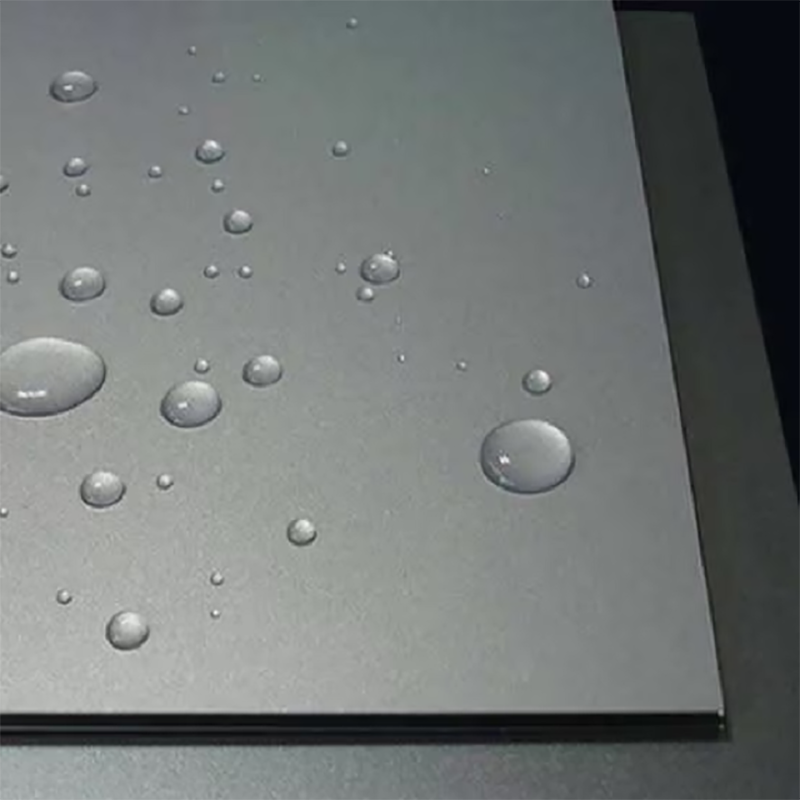
Geographic and environmental variables accelerate wear on exterior cladding. A panel that survives 30 years in a mild, temperate climate may fail in 15 years if subjected to extreme coastal storms or desert heat. Identifying these regional stressors during the specification phase allows engineers to mitigate risks through proper material selection and detailing.
Ultraviolet radiation relentlessly attacks the chemical bonds of surface coatings. This leads to chalking and fading. Chalking occurs when the resin binder degrades, leaving the bare pigment particles exposed on the surface as a white powder. Fading is the actual breakdown of the pigment itself. High-quality fluoropolymer coatings resist this process, but prolonged exposure in regions with intense summer sun still demands the highest grade of UV protection available.
Solar heat gain introduces severe thermal mechanical stress. Dark-colored panels absorb significantly more solar radiation than light-colored panels. A black or dark grey facade can reach surface temperatures exceeding 80°C in direct sunlight. This extreme heat causes the aluminum skins to expand rapidly. It places immense shear force on the core adhesives and the mechanical fasteners holding the panel to the wall. Engineered expansion joints are mandatory to accommodate this movement.
Marine environments present a unique threat known as filiform corrosion. This is a specific type of localized corrosion that occurs under thin coatings. It appears as thread-like filaments spreading across the panel surface. Salt spray deposits chlorides on the facade. If these chlorides penetrate a micro-scratch or an unsealed edge, they react with the aluminum substrate, lifting the coating from the inside out.
Mitigating this risk requires strict detailing. Marine-grade protective primers must be applied beneath the topcoat to isolate the aluminum. Furthermore, all panel edges must be meticulously sealed. Raw, exposed edges allow salt-laden moisture to attack the core bond directly. Proper extrusion profiles and compatible sealants prevent salt ingress and protect the panel's structural integrity.
Harsh winters test the physical limits of cladding systems through freeze-thaw cycling. If water penetrates unsealed edges, joints, or improperly installed rivets, it can become trapped within the panel system. When temperatures drop below freezing, this trapped water expands by approximately 9%. This expansion exerts massive hydraulic pressure on the surrounding materials.
Repeated freeze-thaw cycles can force the aluminum skins to delaminate from the core. It can also warp the framing system and compromise the weather barrier behind the cladding. Preventing moisture ingress requires a properly designed rainscreen system. The system must allow incidental water to drain freely and ensure adequate ventilation behind the panels to dry out condensation before it freezes.
Organic cladding materials struggle in damp, humid, or heavily forested environments. Wood and organic-based composites absorb moisture. This leads to rot, mold, mildew, and structural decay. They also attract pests, including termites and woodpeckers, which can destroy a facade in a matter of years.
Aluminum composite panels are entirely impervious to biological threats. The inorganic nature of the aluminum skins and mineral cores guarantees absolute resistance to rot and fungal growth. Pests cannot penetrate the metal surface. This immunity ensures structural stability and drastically reduces the maintenance burden in high-moisture climates.
Contextualizing the value of composite panels requires comparing them to other common exterior materials. Each cladding type offers distinct advantages and engineering challenges. Understanding these trade-offs helps architects specify the right material based on weight restrictions, structural loads, and long-term weatherability requirements.
The primary advantage of composite panels over solid aluminum is the weight-to-rigidity ratio. To achieve the same flatness and resistance to wind deflection as a 4mm composite panel, a solid aluminum sheet must be significantly thicker. This thicker gauge drastically increases the overall weight of the facade.
Heavier solid sheets require more robust substructures to support the load. They are also much harder to fabricate and bend on-site. Solid aluminum is highly susceptible to oil-canning. This visual distortion ruins the clean, flat aesthetic desired in modern architecture. The composite sandwich structure inherently resists oil-canning, providing a perfectly flat surface at a fraction of the weight.
Fiber cement is a popular, rigid cladding material. However, it presents several long-term challenges. It is porous and can absorb moisture if the paint or sealant fails. In freezing climates, this absorbed moisture leads to cracking and spalling. Fiber cement is also exceptionally heavy. It requires heavy-duty framing and increases labor fatigue during installation.
Composite panels are completely impermeable to moisture. They will never crack or spall due to water absorption. Furthermore, they are significantly lighter than fiber cement. This reduces the dead load on the building structure and accelerates the installation process. Cutting fiber cement also generates hazardous silica dust, requiring strict respiratory protection. Aluminum panels cut cleanly with standard woodworking tools.
High-Pressure Laminates and wood-plastic composites offer warm, textured aesthetics. However, their UV resistance over a 20-year period often falls short of metal facades. The resins and organic fibers in these materials are susceptible to fading, bleaching, and surface micro-cracking under intense sun exposure. They require more frequent cleaning and sometimes chemical re-sealing to maintain their appearance.
Composite panels offer general superiority in extreme sun exposure due to their PVDF coatings. Fluoropolymers simply outlast organic resins in UV resistance. Additionally, metal panels provide absolute resistance to the rotting and warping that plagues organic composites over time. For permanent, low-maintenance facades, aluminum remains the more stable long-term choice.
Cladding Material | Weight Profile | Moisture Resistance | Long-Term Flatness |
|---|---|---|---|
Aluminum Composite Panel | Lightweight (approx. 5.5 kg/m²) | 100% Impermeable | Excellent; resists oil-canning. |
Solid Aluminum Sheet | Heavy (requires thicker gauge) | 100% Impermeable | Poor; highly susceptible to oil-canning. |
Fiber Cement | Very Heavy (approx. 14 kg/m²) | Porous; requires sealing | Good; but prone to cracking if frozen. |
HPL / Wood Composites | Moderate to Heavy | Vulnerable to edge swelling | Moderate; can warp under thermal stress. |
The most advanced materials will fail if installed incorrectly. Installation methodology dictates survival. Providing actionable engineering and maintenance frameworks ensures the panels reach their maximum 30-year potential. Facade engineers must account for movement, chemical compatibility, and routine upkeep.
Aluminum expands and contracts with temperature changes. A 3-meter panel can change length by several millimeters between a freezing winter night and a scorching summer afternoon. If panels are hard-fastened tightly to the wall with no room to move, this thermal energy must go somewhere. The panels will buckle, warp, or shear their rivets entirely.
Managing this movement requires engineered mounting systems. Rout-and-return cassette systems use sliding clips mounted in aluminum extrusions. These clips allow the panel to float independently of the substructure. The panel can expand and contract smoothly without binding. Slotted holes and specialized fasteners are mandatory to accommodate this continuous thermal cycling without damaging the facade.
Galvanic corrosion occurs when two dissimilar metals come into electrical contact in the presence of an electrolyte like rainwater. If aluminum panels are attached directly to steel framing or fastened with zinc-plated screws, the aluminum will act as an anode and corrode rapidly. This destroys the attachment points and causes the panels to fall off the building.
Preventing galvanic corrosion requires strict isolation. Installers must use neoprene, nylon, or EPDM separators between the aluminum and any dissimilar metals. Stainless steel fasteners are generally required. Furthermore, proper weather-barrier integration is essential. Installers must use compatible, non-staining silicone sealants in panel joints. Incompatible sealants can leach oils into the panel finish, causing permanent staining and dirt pickup.
While PVDF coatings are highly durable, they are not self-cleaning. Airborne dirt, industrial fallout, diesel soot, and coastal salt accumulate on the facade over time. If left indefinitely, these deposits can eventually degrade the coating and ruin the building's aesthetic.
Implementing a realistic cleaning schedule extends the facade's life. An annual or bi-annual wash is usually sufficient. Maintenance crews should use mild, non-abrasive detergents and low-pressure water. Harsh solvents, abrasive brushes, or high-pressure power washing will scratch the clear coat and damage the PVDF resin. Consistent, gentle cleaning removes corrosive deposits and keeps the color vibrant for decades.
Future-proofing an investment requires addressing what happens when the cladding eventually reaches the end of its functional life. Modern architecture demands circularity. Materials must not end up in landfills after their 30-year deployment. Aluminum panels offer significant end-of-life advantages compared to mixed-plastic or cementitious alternatives.
Aluminum is infinitely recyclable. It loses no physical properties during the melting and reforming process. The challenge with composite panels historically was separating the metal from the core. Modern recycling facilities now utilize advanced mechanical and thermal separation techniques. They strip the aluminum skins away from the mineral or polymer core efficiently.
Once separated, the aluminum is melted down and reintroduced into the global supply chain. This requires only 5% of the energy needed to produce primary aluminum from bauxite ore. The core materials, particularly the mineral fillers, can often be repurposed into other industrial products. This circular lifecycle drastically reduces the embodied carbon of the building over its total lifespan.
Green building standards heavily favor recyclable, durable materials. Specifying highly durable, recyclable composite panels directly contributes to LEED certification. These materials impact several credit categories within the LEED v4 framework.
Projects earn credits for building lifecycle impact reduction by using materials that last decades without replacement. They also earn credits for sustainable material sourcing, particularly if the aluminum skins contain a high percentage of pre-consumer or post-consumer recycled content. By choosing engineered metal facades, developers align their projects with global sustainability goals while securing a long-lasting exterior.
Disqualify panels with standard polyester (PE) finishes for any permanent outdoor architectural applications to prevent premature fading.
Mandate fire-retardant (FR) or A2 non-combustible cores in your specifications to ensure compliance with current and future building safety codes.
Require the facade installer to submit detailed shop drawings proving the mounting system accommodates regional thermal expansion limits.
Request technical data sheets (TDS) and review warranty documentation to verify specific Delta-E color-fade tolerances for your chosen finish.
Schedule a consultation with a specialized cladding engineer to review wind load calculations and galvanic isolation details before procurement.
A: Yes, panels can be repainted, but it requires a complex process. The original PVDF coating must be thoroughly cleaned, abraded, and primed with specialized bonding agents. Standard exterior house paint will not adhere properly to fluoropolymer resins. Professional architectural refinishers must apply high-performance air-dry fluoropolymer coatings to restore the facade's weatherability.
A: Dark panels do not necessarily fail faster, but they endure higher stress. They absorb more solar radiation, leading to higher surface temperatures and greater thermal expansion. This requires larger expansion joints and more robust adhesives. High-quality PVDF coatings protect dark pigments from UV fading, but the mechanical system must be engineered for the extra heat.
A: A standard 20-year architectural coating warranty typically covers excessive chalking, peeling, and color fading beyond a specific Delta-E threshold. It does not cover damage from impact, improper cleaning chemicals, building settlement, or galvanic corrosion caused by poor installation practices.
A: Salt air can cause filiform corrosion if it penetrates the bond between the aluminum skin and the core. Raw, unsealed edges are highly vulnerable in coastal areas. Installers must use proper extrusions, marine-grade primers, and compatible silicone sealants to encapsulate the edges and prevent chloride ingress.
A: In most developed regions, highly combustible PE cores are strictly banned for exterior cladding on mid-rise and high-rise buildings due to severe fire risks. They may still be permitted for ground-level signage or single-story structures, but mineral-filled FR or A2 cores are the required standard for architectural facades.
A: Clean facades annually using low-pressure water and mild, neutral-pH detergents. Apply the solution with soft sponges or soft-bristle brushes. Never use harsh solvents, abrasive scouring pads, or high-pressure zero-degree nozzles, as these will permanently scratch or strip the protective clear coat.


