
Views: 0 Author: Site Editor Publish Time: 2025-09-10 Origin: Site


You discover the exceptional strength of aluminum honeycomb panels in their unique structure. The hexagonal honeycomb core spreads force evenly, making the panels strong and light. Smaller cell sizes boost compressive and shear strength, so you get greater impact resistance. The sandwich design with thin aluminum skins bonded to the core increases rigidity and compressive strength.
| Feature | Description |
|---|---|
| Strength | High strength-to-weight ratio from face sheets and honeycomb core |
| Stiffness | Structural efficiency provides excellent stiffness |
| Load Distribution | Spreads force for better mechanical performance |
| Compressive Strength | Core delivers superb compressive strength and stiffness |
Aluminum honeycomb panels are strong due to their unique hexagonal core design, which spreads force evenly.
The lightweight nature of these panels makes them easy to handle and install, saving time and labor costs.
High compressive strength and rigidity make aluminum honeycomb panels ideal for demanding applications like aviation and construction.
These panels offer excellent fire resistance, helping to keep buildings and vehicles safe from fire hazards.
Aluminum honeycomb panels are environmentally friendly; they are 100% recyclable and support green building standards.
The advanced bonding techniques used in manufacturing ensure durability and prevent issues like delamination.
Vibration damping properties enhance comfort in spaces like elevators and transit vehicles, making rides quieter.
Choosing aluminum honeycomb panels can lead to long-term savings due to their durability and low maintenance needs.
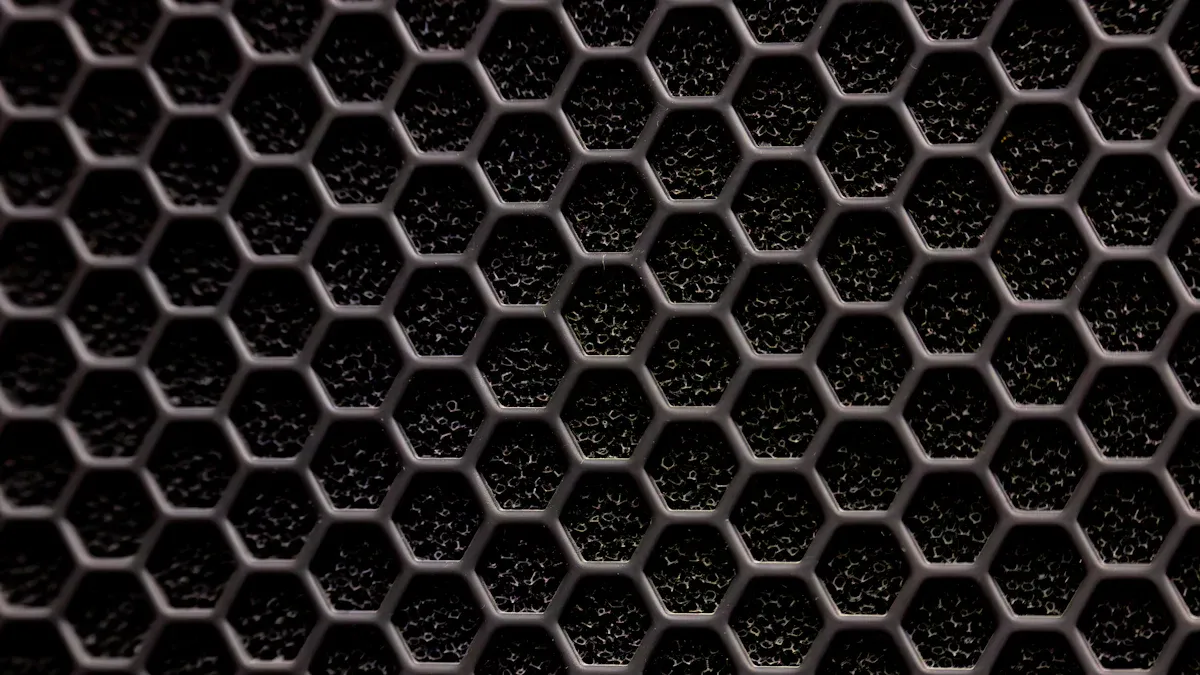
You see the strength of aluminum honeycomb panels in their core design. The honeycomb core uses hexagonal cells, which are famous for their efficiency and stability. Each cell shares its walls with neighboring cells, so the structure uses less material but stays strong. Hexagons stand out among other shapes for load distribution and structural integrity.
| Honeycomb Geometry | Performance in Load Distribution | Structural Integrity |
|---|---|---|
| Triangle | Moderate | Moderate |
| Square | High | High |
| Diamond | Moderate | Moderate |
| Hexagon | High | High |
| Kagome | Moderate | Moderate |
| Octagon | Very High | Very High |
You notice that hexagonal cells provide high performance in both load distribution and structural integrity. This makes them the preferred choice for the core of aluminum honeycomb panels.
When you apply force to the panel, the hexagonal core spreads the stress across the entire surface. This prevents weak spots and reduces the risk of failure. The honeycomb core acts like a network, absorbing energy and protecting the panel from damage. You benefit from a panel that stays flat and strong, even under heavy loads.
| Structural Advantage | Description |
|---|---|
| Lightweight | Aluminum honeycomb panels are significantly lighter than traditional materials, enhancing usability. |
| High Stiffness | The design provides enhanced bending stiffness, making it suitable for various applications. |
| Energy Absorption | Capable of absorbing energy through core compression, improving safety in impact scenarios. |
| Mechanical Performance | Exhibits superior mechanical performance under different loading conditions compared to foams. |
You get a panel that is light, stiff, and able to absorb energy. These features make aluminum honeycomb panels ideal for demanding environments.
You find two thin aluminum skins on each side of the honeycomb core. These skins add strength and protect the core from damage. High-quality aluminum alloys give the skins excellent corrosion resistance and durability. The skins work with the core to create a rigid and stable panel.
You rely on advanced bonding techniques to hold the skins and core together. Manufacturers use strong adhesives and precise processes to ensure a tight bond. This bond keeps the panel intact, even when exposed to vibration or heavy use. The development of modern adhesive technologies improves the long-term performance and integrity of aluminum honeycomb panels. You can trust these panels to last in high-stress environments.
The sandwich structure resists vibration fatigue and core shear failure.
Predictable fatigue life helps you plan for long-term use.
Strong bonding prevents delamination and keeps the panel durable.
Tip: When you choose aluminum honeycomb panels, you invest in a product with a proven structure. The combination of hexagonal core, aluminum skins, and advanced bonding gives you a panel that is strong, light, and reliable.
You benefit from the impressive compressive strength of honeycomb panels. The hexagonal cell shape in the core plays a key role. Each hexagon shares its walls with neighboring cells, so the structure spreads force efficiently. Laboratory tests show that hexagonal honeycomb cores increase compressive strength by 19%. This means you get a panel that resists crushing forces better than many other designs.
| Honeycomb Shape | Increase in Compressive Strength | Increase in Specific Energy Absorption |
|---|---|---|
| Hexagonal | 19% | N/A |
| Square | 57% | 172% |
You see that while square cells offer higher compressive strength, hexagonal cells provide a balance of strength, weight, and material efficiency. This makes them the preferred choice for most engineering applications. When you use panels with hexagonal cores, you ensure reliable performance under heavy loads.
You notice that rigidity is another standout feature. Aluminum honeycomb panels deliver flexural rigidity about five times greater than solid aluminum alloys. This high rigidity means the panels stay flat and resist bending, even when you apply significant force. You can use them in places where you need lightweight materials that do not sag or deform.
You get lightweight panels.
You enjoy high specific strength.
You benefit from flexural rigidity that outperforms solid aluminum by a wide margin.
When you compare these panels to plywood or composite boards, you find that honeycomb panels maintain their shape better and last longer under stress. This makes them ideal for demanding environments like transit vehicles, cleanrooms, and architectural cladding.
You also gain from the vibration damping properties of these panels. The honeycomb core absorbs and reduces vibrations, which helps protect sensitive equipment and improves comfort in spaces like elevators and vehicles. Acoustic engineering studies show that the sandwich structure of the panel controls resonant amplitudes and limits sound transmission.
| Study Focus | Findings |
|---|---|
| Vibration Behavior | Sandwich theory shows the honeycomb core is effective in vibration damping. |
| Acoustic Performance | Sound power radiation studies highlight the advantages of honeycomb structures. |
| Key Findings | Description |
|---|---|
| Modal Damping Factors | Calculated using modal strain energy, showing control over resonant amplitudes. |
| Comparison with FRP | FRP panels offer higher damping, but honeycomb panels still perform well. |
| Weight Reduction | Honeycomb panels allow for significant weight savings without losing comfort. |
You find that the material and structure both influence how well the panel dampens vibration. This makes the panels suitable for environments where noise and vibration control matter.
Note: You also benefit from excellent fire resistance. Standardized tests show that these panels achieve top fire ratings, such as A2 and non-combustible classifications. You can trust them to meet strict building codes and safety standards.
| Product Description | Fire Rating | Additional Information |
|---|---|---|
| 50mm Thick Stone Look Aluminum Honeycomb Wall Panels | A2 | Test reports available |
| Thermal Insulation Aluminum Honeycomb Panels | Non-combustible, self-extinguishing | Meets flammability ratings and building codes |
| HONEYTECH Aluminum Honeycomb Panels | Non-combustible | Complies with stringent fire regulations |
You get panels that not only resist vibration but also help keep your projects safe from fire hazards.
You often need materials that are both strong and light. Aluminum honeycomb panels give you this advantage. The unique honeycomb core uses less material but keeps high strength. You get a panel that is easy to handle and install. This lightweight design helps in many industries.
In aerospace, you find these panels in aircraft interiors, cabin linings, and seating structures. The panels keep the plane light, which is important for safety and fuel savings.
Aircraft flooring and bulkheads use these panels because they offer strength without adding extra weight.
High-speed trains use them to lower the total weight of the train. This helps the train move faster and use less energy.
Shipbuilders choose these panels for interior fittings and hull structures. The panels resist corrosion and keep the ship light.
Car makers use them in body panels and interiors. This improves fuel efficiency and keeps the car strong.
You see that the lightweight advantage is not just about saving weight. It also means better performance, easier installation, and lower costs in the long run.
You benefit from weight reduction in many ways when you use these panels. In aircraft, every pound saved means less fuel used and fewer emissions. You help the environment and save money at the same time. The panels give you strength without bulk, so you do not sacrifice safety or durability.
You find that honeycomb panels are lightweight and durable, making them perfect for construction projects.
The hexagonal cell structure uses less material, which saves money and supports sustainability.
Lightweight aluminum increases efficiency in places where every pound matters.
In some cases, these panels are up to 40 times stronger than traditional materials, even though they weigh much less.
When you compare aluminum honeycomb panels to solid aluminum or plastic panels, you notice a big difference. Solid aluminum is strong but heavy. Plastic panels are light but not as strong. Honeycomb panels give you the best of both worlds. You get high strength and low weight, which is ideal for modern engineering and design.
Tip: When you choose lightweight panels, you make your project easier to build, move, and maintain. You also help reduce energy use and support a greener future.
You see the strength of aluminum honeycomb panels begin with the careful selection and shaping of materials. Manufacturers use high-quality aluminum alloys to create both the skins and the honeycomb core. These alloys give you panels that resist fatigue, impacts, and harsh environments. Metallurgical studies show that these alloys offer superior strength, reliability, and thermal insulation. You benefit from panels that perform well under heavy loads and provide safety in demanding applications.
| Advantage/Characteristic | Description |
|---|---|
| Strength and Reliability | Enhanced through mechanical properties |
| Structural Performance | Optimal under various loading conditions |
| Weight Reduction | Offers a more streamlined design |
| Fatigue Resistance | Superior compared to conventional steel structures |
| Thermal Insulation | Effective in applications |
| Impact Strength | Increased capability to withstand impacts |
| Resistance to Blasts and Ballistic Impacts | Enhanced safety features |
You watch the manufacturing process unfold in several precise steps:
You start with aluminum alloy sheets, which are cut and treated for the desired surface finish.
You expand aluminum foil into a hexagonal honeycomb structure and cut it to size.
You apply adhesive to bond the faceplates and the honeycomb core.
You assemble the faceplates and core, then press them together to form a rigid panel.
You cure the adhesive to ensure a strong bond between all components.
Each step uses advanced machinery and strict quality controls. You get panels with consistent cell size, flatness, and strength. The hexagonal cells distribute force evenly, so your panels stay strong and lightweight.
You rely on advanced bonding techniques to keep the panel intact and durable. Manufacturers use specialized adhesives and heat-activated processes to join the aluminum skins to the honeycomb core. This strong bond lets the panel act as a single unit, transferring loads efficiently between layers. You avoid problems like delamination and weak spots.
You see that the curing process is essential. Heat and pressure activate the adhesive, locking the skins and core together. You get a panel that resists vibration, impact, and environmental stress. The bond ensures long-term performance, even in high-stress environments like transit vehicles or cleanrooms.
Tip: When you choose panels made with precision forming and advanced bonding, you invest in reliability and safety. You get materials that meet strict standards and deliver consistent results.

You see aluminum honeycomb panels used in many architectural projects. These panels help you create buildings that are safe, quiet, and beautiful. You can use them for wall cladding, ceilings, partitions, and facades. Their lightweight nature makes installation easier and faster. You also get panels that resist fire, corrosion, and harsh weather. This means your building stays strong and looks good for years.
Take a look at how these panels perform in different architectural settings:
| Application Area | Performance Metric | Description |
|---|---|---|
| Conference Rooms, Recording Studios | Sound Insulation | Effectively blocks sound spread, improving acoustic quality and guest satisfaction. |
| High-Rise Buildings | Fire Retardancy | Prevents fire spread, enhancing safety and allowing time for evacuation during emergencies. |
| Coastal Areas | Corrosion Resistance | Resists salt spray and maintains appearance and performance over time in harsh environments. |
| Outdoor Environments | Weather Resistance | Withstands natural elements without fading or deforming, ensuring durability and long service life. |
| Aesthetic Applications | Aesthetic Versatility | Surface treatments allow for diverse visual effects, catering to various design needs. |
You can choose panels with different finishes and colors to match your design vision. The panels also help you meet strict building codes for fire safety and energy efficiency.
You find aluminum honeycomb panels especially useful in elevator interiors. Their lightweight design reduces the total weight of the elevator system by up to 40%. This helps you save energy and lower operating costs, especially in tall buildings. The panels resist corrosion, so they last longer even in humid or busy environments. You also get peace of mind because these panels meet modern fire safety standards. You can trust them to protect passengers and property.
Elevator manufacturers prefer these panels because they combine strength, safety, and easy installation. You can select panels with decorative finishes to create a stylish look inside the elevator. The panels stay flat and do not warp, so your elevator always looks clean and professional.
You see aluminum honeycomb panels making a big difference in buses, trains, and subways. Their lightweight construction helps reduce the overall weight of the vehicle. This leads to better fuel efficiency and lower energy use. You also get panels that provide excellent sound and heat insulation, making rides quieter and more comfortable for passengers.
The panels offer high strength-to-weight ratios, so they stand up to daily wear and tear. You benefit from uniform stress distribution, which lowers the risk of failure in critical parts. The panels absorb energy from impacts, helping to keep passengers safe in case of accidents. Their fire resistance adds another layer of protection.
Here are some key benefits for transit vehicles:
Lightweight construction for improved fuel efficiency.
High strength-to-weight ratios for durability.
Uniform stress distribution to prevent failure.
Excellent acoustic and thermal insulation for passenger comfort.
Energy and impact absorbency for safety in transit vehicles.
Enhanced fire resistance and environmental safety.
You can rely on these panels to keep your vehicles safe, efficient, and comfortable. Their durability means you spend less on repairs and replacements over time.
You face strict requirements when you design and build cleanrooms. You need materials that keep the environment safe, stable, and easy to maintain. Aluminum honeycomb panels help you meet these demands. You get panels that offer superior fire resistance and effective thermal insulation. These features make your cleanroom safer and more energy-efficient.
You notice that cleanrooms must control temperature and prevent the spread of fire. Aluminum honeycomb panels give you a strong barrier against heat and flames. You see that the panels reach a B1 fire rating, which means they resist burning and slow down fire spread. You also benefit from a fire resistance rating of 1.0 hour. This gives you more time to respond in case of emergencies.
You want to keep your cleanroom at a stable temperature. Aluminum honeycomb panels help you do this. The panels have a thermal conductivity of ≤0.030 w/(m·k) at an average temperature of 25℃. This low value means heat moves slowly through the panel. You keep your cleanroom cool or warm with less energy. You save money and protect sensitive equipment.
You can see the main properties of aluminum honeycomb panels for cleanrooms in the table below:
| Property | Value |
|---|---|
| Heat-transfer coefficient | 0.73 W/M²·k |
| Fire resistance rating | 1.0 h |
| Insulation effectiveness | Effective barrier against heat and fire |
You find that these panels work well in safety-critical applications. You use them for walls, ceilings, and partitions in cleanrooms. You get a surface that is easy to clean and does not trap dust or germs. You also enjoy quick installation because the panels are lightweight. You move and fit them without heavy equipment.
You benefit from several advantages when you choose aluminum honeycomb panels for cleanrooms:
Superior fire resistance keeps your workspace safe.
Effective thermal insulation helps you control temperature.
Lightweight design makes installation easier.
Smooth surfaces support hygiene and easy cleaning.
Durable construction stands up to daily use.
You improve your cleanroom’s safety and efficiency with these panels. You protect your staff and equipment from fire and heat. You also create a space that meets strict industry standards. You see why many engineers and facility managers trust aluminum honeycomb panels for cleanroom projects.
Tip: When you select panels with high fire and thermal ratings, you invest in long-term safety and energy savings. You make your cleanroom a better place to work and maintain.
You want panels that last in tough environments. Aluminum honeycomb panels give you that reliability. The design uses high-quality aluminum alloys, which resist corrosion and stand up to harsh weather. You can install these panels indoors or outdoors. They keep their strength and appearance for many years. You save money because you do not need frequent repairs or replacements.
You see these panels perform well in coastal areas, where salt spray can damage other materials.
You notice that manufacturers treat the panels for maximum weather resistance. The panels keep their color and shape, even after decades of use.
You benefit from a surface that stays flat and clean. The panels resist water damage and do not warp or crack.
You find that aluminum honeycomb panels are lightweight. You handle and install them easily, which reduces labor costs.
Tip: When you choose aluminum honeycomb panels, you invest in a product that stands up to rain, wind, and sun. You get panels that protect your building and keep it looking good.
| Feature | Benefit |
|---|---|
| Corrosion Resistance | Panels last longer in humid climates |
| Weather Resistance | Maintains performance over decades |
| Lightweight Design | Easier installation and handling |
| Flat Surface | Clean look and acoustic insulation |
You care about the environment. Aluminum honeycomb panels help you build sustainably. Aluminum is 100% recyclable. You can reuse the panels at the end of their life. This means you do not add waste to landfills. The manufacturing process uses minimal material and creates almost zero waste. You support green building standards, such as LEED, when you use these panels.
You find that recycling aluminum saves energy and resources. The process uses less energy than making new aluminum from raw materials.
You see that lightweight panels reduce transportation emissions. You move more panels with less fuel, which lowers your carbon footprint.
You notice that the panels use less material than solid aluminum or other heavy panels. This makes them an ecological choice for your project.
You help lower the environmental impact of construction. You choose a product that supports sustainability goals.
Note: When you select aluminum honeycomb panels, you make a smart choice for the planet. You use a product that is strong, durable, and environmentally friendly.
| Sustainability Feature | Description |
|---|---|
| 100% Recyclable | Panels can be reused and do not create waste |
| Efficient Manufacturing | Minimal material usage and waste |
| Lower Transportation Emissions | Lightweight design reduces fuel use |
| Supports Green Building | Helps achieve LEED and other certifications |
You see that durability and sustainability go hand in hand. Aluminum honeycomb panels from Zhejiang Kangzhan New Materials Co. Ltd. give you long-lasting performance and help you protect the environment. You build smarter and greener with every panel you choose.
You may wonder how aluminum honeycomb panels compare to solid aluminum sheets. The difference starts with weight. Honeycomb panels weigh much less than solid aluminum, which makes them easier to transport and install. You save on labor and shipping costs. The honeycomb structure also gives you higher rigidity and minimal deflection, so your panels stay flat and strong over time.
| Aspect | Aluminum Honeycomb Panels | Solid Aluminum Panels |
|---|---|---|
| Weight | 5.2 Kg per Sqm | 8.16 Kg per Sqm |
| Rigidity | Exceptionally high | Lower |
| Transportation Costs | Reduced | Higher |
| Labour Costs | Reduced | Higher |
| Fabrication | Factory-fabricated | On-site fabrication |
| Structural Stability | Minimal deflection | Potential for higher deflection |
| Cost-effectiveness | Economically viable | Less economical |
You see that honeycomb panels offer better cost-effectiveness and stability. You get a product that performs well in demanding environments and helps you manage your budget.
You might consider composite panels for your project. These panels often use a plastic core with aluminum skins. They are lighter than honeycomb panels, but you get less formability. Honeycomb panels can be shaped into more complex forms, which gives you more design options. You find both types offer good impact resistance and rigidity.
| Feature | Aluminum Composite Panels (ACP) | Aluminum Honeycomb Panels |
|---|---|---|
| Weight | Lighter due to plastic core | Heavier due to aluminum core |
| Formability | Limited formability | Better formability, can be shaped into various forms |
| Applications | External cladding, signage | Aviation, aerospace, transportation, construction |
| Rigidity and Strength | High strength and rigidity | High strength and rigidity |
| Impact Resistance | Good impact resistance | Good impact resistance |
You notice that honeycomb panels excel in structural applications like aviation and transportation. You benefit from their strength and versatility in more demanding settings.
Tip: Choose honeycomb panels when you need advanced formability and superior performance in tough environments.
You may have used plywood or plastic panels before. Plywood bends well and works for load-bearing areas. It can withstand high temperatures and remains durable after boiling in water. Plastic panels vary in durability, depending on the materials used. However, when you need fire resistance and long-term durability, honeycomb panels stand out.
| Material | Fire Resistance | Durability |
|---|---|---|
| Aluminum Honeycomb Panels | Inherently resist fire; slows fire spread | Highly resistant to weather, corrosion, and wear |
| Plywood | Withstands high temperatures; durable after boiling | Better bending resistance; strong in load-bearing areas |
| Plastic Panels | Less fire resistant than aluminum honeycomb | Durability depends on composite materials used |
Plywood gives you better bending resistance, which helps in some construction projects.
Honeycomb panels resist fire and corrosion, so you get safety and longevity.
Plastic panels may not offer the same level of fire protection or durability.
You see that aluminum honeycomb panels provide high strength, fire resistance, and weather protection. You get a reliable solution for projects where safety and durability matter most.
Note: Many industries choose honeycomb panels for their ingenious design, impact resistance, and environmental friendliness. You can trust these panels to perform in challenging conditions.
You see aluminum honeycomb panels deliver outstanding strength because of their hexagonal core and durable aluminum skins. You benefit from lightweight design, high rigidity, and excellent fire resistance. Recent innovations improve sound absorption, mechanical properties, and eco-friendly materials. You help the environment by choosing panels that support green building standards and energy efficiency.
| Innovation Area | Sustainability Impact |
|---|---|
| Sound Absorption | Improved comfort in buildings |
| Eco-Friendly Materials | Reduced carbon footprint |
| Recyclability | Supports green building initiatives |
You get strength from the hexagonal honeycomb core and aluminum skins. The core spreads force evenly. The skins add rigidity. This design helps the panel resist bending and crushing.
You can use these panels outside. The aluminum resists corrosion and weather damage. You see them in building facades, cladding, and outdoor structures.
You benefit from non-combustible aluminum. The panels slow fire spread. Many panels meet strict fire ratings like A2. You improve safety in buildings and vehicles.
You find installation simple. The panels are lightweight. You handle and fit them without heavy equipment. This saves time and labor costs.
You see these panels in architecture, elevators, transit vehicles, and cleanrooms. They work well for walls, ceilings, partitions, and cladding.
You can recycle these panels. Aluminum is 100% recyclable. You help the environment by choosing panels that support green building standards.
You get higher rigidity and lower weight with honeycomb panels. Solid sheets are heavier. Honeycomb panels are easier to transport and install.
Tip: You can contact Zhejiang Kangzhan New Materials Co. Ltd. for more details or technical support.


