
Views: 0 Author: Site Editor Publish Time: 2025-09-10 Origin: Site


You see aluminum foil become a strong, lightweight panel through a precise manufacturing process. Workers prepare the foil, layer it, and expand it into a honeycomb core. Machines bond the core with outer skins, creating aluminum honeycomb panels ready for demanding environments.
Construction projects use these panels in walls, ceilings, and floors, showing a 25% increase in sustainable designs across Asia-Pacific.
Transportation industries rely on them in railcars, trucks, and electric vehicles, with a 20% rise in usage.
Aluminum honeycomb panels are lightweight yet strong, making them ideal for construction and transportation applications.
Choosing the right aluminum foil grade, like 3003 or 5052, is crucial for achieving the desired strength and flexibility in panels.
High-quality adhesives enhance the durability and performance of aluminum honeycomb panels, ensuring they withstand environmental stresses.
Proper surface treatment of aluminum foil is essential for strong adhesive bonds, which directly impacts the panel's longevity.
Careful stacking and alignment of aluminum sheets during manufacturing ensure consistent strength and flatness in the final product.
The pressing and curing stages are vital for bonding layers together, creating a solid structure that meets high performance standards.
Uniform hexagonal cells in the honeycomb core distribute loads evenly, contributing to the panel's impressive strength-to-weight ratio.
Aluminum honeycomb panels are fully recyclable, supporting sustainable building practices and reducing environmental impact.
When you look at aluminum honeycomb panels from Zhejiang Kangzhan New Materials Co. Ltd., you see a combination of carefully selected materials. Each part plays a key role in the strength, durability, and performance of the finished panel. High-quality materials ensure that the panels meet strict standards for safety and reliability.
You start with aluminum foil, which forms the honeycomb core. Manufacturers choose foil based on its alloy grade and surface treatment. The most common grades are 3003 and 5052. These grades offer the right balance of strength and flexibility for panel construction.
| Aluminum Alloy Grade | Application |
|---|---|
| 3003 | General use |
| 5052 | High strength applications |
Aluminum foil from the 3000 series receives strict surface treatment to improve bonding and corrosion resistance. For projects that need extra durability, you may see 1100 pure aluminum used, but only with careful consideration. The choice of foil affects the panel’s weight, compressive strength, and overall performance.
Tip: Always check the alloy grade and surface finish when selecting aluminum foil for honeycomb panels. This step helps you achieve the best results for your application.
Adhesives hold the honeycomb core together and bond it to the outer skins. You need high-quality adhesives to ensure the panel stays strong under stress and lasts for years. Premium thermoplastic adhesive films provide better elasticity and weather resistance than regular epoxies. This means your panels can handle temperature changes and mechanical loads without losing strength.
High-quality adhesives create robust bonds that resist environmental and mechanical stresses.
Premium adhesive films improve durability and flexibility.
The amount and type of adhesive affect energy absorption and impact resistance.
Larger adhesive fillets can increase the force needed to dent the panel, making it tougher.
The right adhesive choice directly influences the structural integrity and lifespan of aluminum honeycomb panels.
The outer skins give the panel its smooth surface and extra strength. You usually see aluminum sheets with thicknesses ranging from 0.1 mm to 2.0 mm. Manufacturers use various aluminum alloys for these skins, including 1050, 1060, 1100, 3003, and 5005. The top layer often uses 3003 alloy at thicknesses like 0.5 mm, 0.7 mm, 0.8 mm, or 1 mm.
| Layer | Thickness (mm) | Aluminum Grade |
|---|---|---|
| Top Layer | 0.1 - 2.0 | 3003, 5005, etc. |
| Bottom Layer | N/A | Aluminum sheet |
The thickness and alloy type of the skins affect the panel’s rigidity, flatness, and appearance. You get better fire resistance and durability when you choose the right combination.
Note: Material quality matters at every stage. If you select top-grade foil, adhesives, and skins, you ensure your aluminum honeycomb panels perform well in demanding environments.
You begin the manufacturing process by cutting aluminum foil to precise sizes. This step sets the foundation for strong and uniform honeycomb cores. Manufacturers select foil thickness based on the final application. For honeycomb cores, you usually see thicknesses between 0.02 mm and 0.06 mm. If you need outer panels, the foil thickness ranges from 0.4 mm to 3.0 mm.
| Feature | Details |
|---|---|
| Alloy Types | 3003-H24, 5052-H14, 3004, 3003 |
| Thickness (Honeycomb Core) | 0.02mm - 0.06mm |
| Thickness (Panel) | 0.4mm - 3.0mm |
| Core Dimensions | Side lengths: 5mm, 6mm, 8mm, 10mm, 12mm |
You use automated cutting machines to ensure every sheet matches the required dimensions. This accuracy helps you achieve consistent cell sizes and panel strength. When you cut the foil, you also reduce waste and improve production efficiency.
Tip: Always check the foil thickness and alloy type before cutting. This step ensures your aluminum honeycomb panels meet industry standards for strength and weight.
After cutting, you treat the aluminum foil surface to improve bonding and durability. Surface treatments remove oxide layers and prepare the foil for adhesive application. You can choose from several methods:
Corona treatment increases surface energy and improves adhesion.
Flame plasma treatment modifies surface chemistry and boosts bond strength.
Atmospheric plasma treatment cleans and etches the surface for better glue performance.
These treatments help you achieve a clean, reactive surface. You also enhance printability and coating adhesion, which is important for panels used in visible architectural applications.
Note: Surface treatment is essential for strong and reliable aluminum honeycomb panels. Skipping this step can lead to weak bonds and reduced panel life.
Once you treat the foil, you apply adhesive to bond the layers together. You use high-temperature curing glue, often epoxy modified for better performance. You coat the foil with a thin, even layer of adhesive. This glue will later fuse the stacked sheets into a solid honeycomb block.
You must control the amount and placement of adhesive. Too much glue adds weight and reduces flexibility. Too little glue weakens the bond. You use automated rollers or sprayers to apply adhesive with precision.
Steps in Adhesive Application:
Coat the surface-passivated foil with high-temperature curing glue.
Stack the glued sheets in the correct order.
Prepare the block for pressing and expansion.
You ensure every layer receives the right amount of adhesive. This attention to detail helps you create panels that resist stress and last for years.
Reminder: Adhesive quality and application technique directly affect the strength and durability of aluminum honeycomb panels.
When you reach the stacking stage, you start to see the honeycomb structure take shape. This step is where you build the foundation for the panel’s strength and reliability. You need to pay close attention to how you layer and align each sheet of aluminum foil. Small mistakes here can affect the entire panel.
You begin by stacking the adhesive-coated aluminum sheets one on top of another. Each layer must sit flat and even. You use automated stacking machines for large batches, but you might stack sheets by hand for custom jobs. The goal is to create a block where every sheet lines up perfectly.
You control several factors during layering:
Facesheet thickness: Thicker facesheets help reduce how much the panel bends or fails under pressure. If you increase the thickness, you can decrease penetration depth by up to 20%.
Core height: Taller cores improve impact resistance. You notice big differences when you use different facesheet materials.
Cell size: Smaller cells absorb more energy and buckle less. This means the back of the panel moves less during impact.
Cell wall thickness: Thicker walls help the panel absorb more energy when something presses into it.
Core density: Denser cores handle higher loads and show smaller damage areas.
| Structural Parameter | Impact on Performance |
|---|---|
| Facesheet Thickness | Reduces deformation; thicker sheets decrease penetration depth by 20% |
| Core Height | Improves impact resistance; varies with facesheet material |
| Cell Size | Smaller cells absorb more energy and reduce buckling |
| Cell Wall Thickness | Increases energy absorption during indentation |
| Core Density | Higher density boosts peak load and limits damage |
You make sure each layer matches the design specifications. This careful layering gives the finished panel its famous strength and flatness.
Tip: If you want panels that last longer and perform better, always check the thickness and density of each layer during stacking.
Once you finish layering, you focus on alignment. You need every sheet to line up in both the ribbon direction (length) and transverse direction (width). Even small misalignments can cause weak spots or uneven expansion later.
You use alignment guides and sensors to keep everything in place. Machines help you achieve tight tolerances, but you still check the stack by hand for quality control. Here are the standard tolerances you follow:
| Parameter | Standard | Maximum | Tolerance |
|---|---|---|---|
| Ribbon direction (L) | 48 / 1219 | 100 / 2540 | +2.0 / -0.0 in +50.8 / -0.0 mm |
| Transverse direction (W) | 96 / 2438 | 144 / 3658 | +4.0 / -0.0 in +101.6 / -0.0 mm |
| Maximum expansion thickness | ≤ 35 in / 889 mm | N/A | N/A |
| Tolerance (T ≤ 4") | ±0.005 in / ±0.127 mm | N/A | N/A |
| Tolerance (T > 4") | ±0.062 in / ±1.575 mm | N/A | N/A |
You keep the stack within these tolerances to ensure the honeycomb expands evenly in the next step. If you stay inside these limits, you get panels with consistent cell sizes and strong bonds.
Note: Careful alignment during stacking helps you avoid problems later. You get panels that look better and perform better in real-world applications.
By mastering layering and alignment, you set the stage for high-quality aluminum honeycomb panels. You give each panel the strength, flatness, and durability needed for demanding environments.
After you finish stacking and aligning the adhesive-coated aluminum sheets, you move to the pressing stage. This step is where you turn the layered block into a solid, bonded structure. You use both heat and pressure to activate the adhesive and lock the layers together. This process is essential for creating the strong honeycomb core that gives aluminum honeycomb panels their unique properties.
You place the stacked block into a specialized press. The press applies even pressure across the entire surface. You set the temperature and pressure based on the adhesive type and the thickness of the block. Most manufacturers use temperatures between 120°C and 180°C (248°F to 356°F). The pressure usually ranges from 0.5 MPa to 2 MPa.
You must monitor the temperature closely. If the heat is too low, the adhesive will not bond well. If it is too high, the aluminum may warp.
You keep the pressure steady to avoid air pockets or uneven bonding.
You use sensors and timers to control the process and ensure every block receives the same treatment.
Tip: Consistent heat and pressure help you achieve uniform strength and flatness in every panel.
Once you apply heat and pressure, you allow the block to cure. Curing means you let the adhesive set and harden. This step locks the layers in place and prepares the block for expansion. The curing time depends on the adhesive and the block size. It can take anywhere from 30 minutes to several hours.
You must keep the block in the press until the adhesive reaches full strength. Removing it too soon can cause weak spots or delamination. After curing, you cool the block slowly to prevent thermal shock. This careful process ensures the honeycomb core stays strong and stable.
You check the block for any signs of incomplete bonding.
You record the curing time and temperature for quality control.
You prepare the cured block for the next step: expansion.
Note: Proper curing is key to making aluminum honeycomb panels that last. Skipping or rushing this step can lead to failures in real-world use.
By mastering the pressing and curing stages, you help create panels that meet high standards for strength, durability, and reliability.
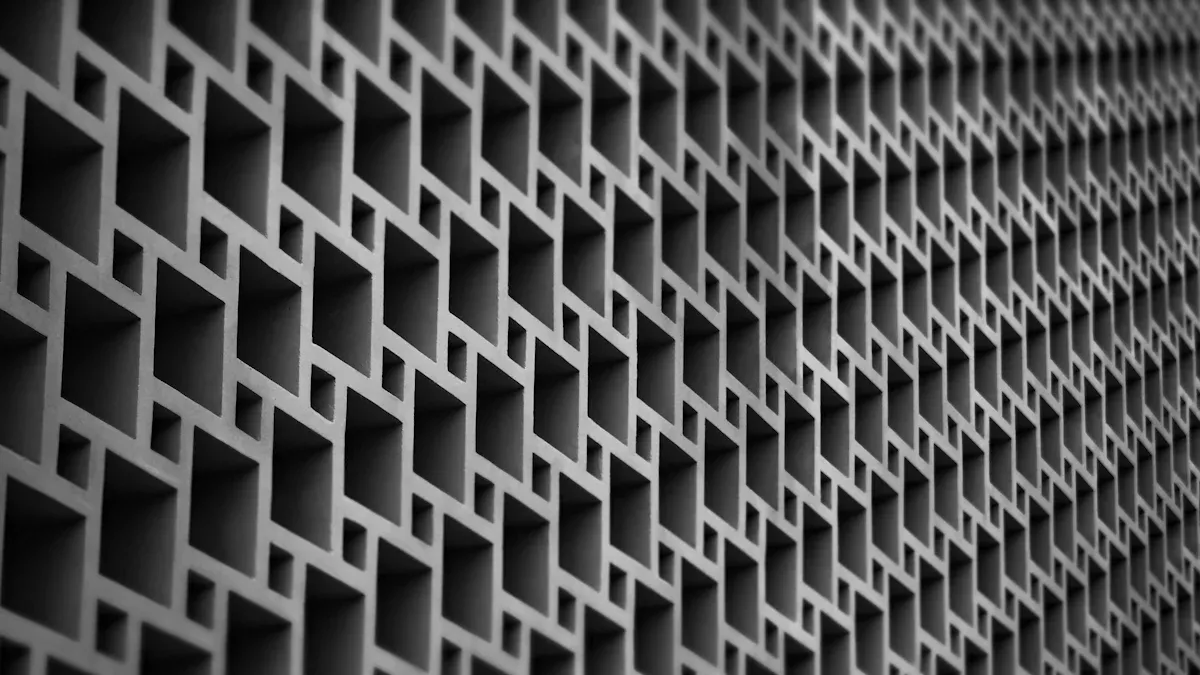
After you press and cure the aluminum honeycomb block, you reach the expansion stage. This step transforms the solid block into the familiar honeycomb structure. You create the hexagonal cells that give the panel its strength and light weight. The expansion process can use manual or machine methods. Your choice depends on the size, thickness, and quantity of the honeycomb core you need.
You use manual expansion for small batches, large cell sizes, or thin honeycomb slices. This method works well when you need flexibility or have custom orders. You start by gripping the ends of the unexpanded block. You wear cut-resistant gloves for safety. You pull the block apart with steady force. As you pull, the glued sheets separate and form the hexagonal pattern.
You may use a simple hand tool with pins on rails. This tool helps you expand larger sheets evenly. You check the cells as you work. You want every cell to open to the same size and shape. If you see uneven cells, you adjust your grip or the tool.
Tip: Manual expansion gives you more control for special projects. You can stop and fix any problems right away.
Manual expansion takes more time and effort. You use it when you do not need many panels or when the honeycomb core is thin. You also choose this method for cell sizes of ¾ inch (about 19 mm) or larger.
You use machine expansion for large-scale production, small cell sizes, or thick honeycomb blocks. Machines help you expand the core quickly and evenly. You place the cured block on an expansion table. The machine grips the ends and pulls the block apart with precise force. You set the machine to match the cell size and thickness you want.
Machines can handle high-density cores and small cells that are hard to expand by hand. You get consistent results every time. You also save time and reduce labor costs.
| Expansion Method | Best For | Advantages |
|---|---|---|
| Manual | Small batches, large cells | Flexibility, hands-on control |
| Machine | Large runs, small cells | Speed, uniformity, efficiency |
Note: Machine expansion ensures every cell matches the design. You get panels with reliable strength and flatness.
You must achieve uniform hexagonal cells in every panel. The honeycomb pattern spreads loads evenly. It gives the panel its famous strength-to-weight ratio. If the cells are uneven, the panel may bend or fail under stress. Uniform cells also improve flatness and appearance.
You check the expanded core for gaps, twists, or misshaped cells. You fix any problems before moving to the next step. This attention to detail ensures your aluminum honeycomb panels meet high standards for quality and performance.
Remember: The expansion step shapes the core of your panel. Careful work here leads to strong, reliable panels that last.
After you expand the honeycomb core, you move to the slicing stage. This step shapes the honeycomb into usable blocks and controls the final cell size. You need precision here because the way you slice the core affects the strength, flatness, and appearance of your aluminum honeycomb panels.
You start by cutting the expanded honeycomb into blocks or slices. You use specialized saws or cutting machines for this job. These machines help you achieve clean, straight edges and consistent thickness. You select the block size based on your project’s requirements. For example, you might need thin slices for lightweight panels or thicker blocks for heavy-duty applications.
You often see two main types of blocks during this stage:
| Block Type | Minimum Thickness | Tolerance |
|---|---|---|
| Unexpanded Slices | 3mm | +/-0.125mm |
| Honeycomb Blocks | Customizable | Varies by order |
You can customize the thickness of honeycomb blocks to fit your needs. If you need a very thin panel, you slice the core down to just a few millimeters. For larger projects, you might keep the blocks thicker. You always check the thickness with calipers or gauges to make sure you stay within the required tolerance. This attention to detail helps you avoid problems during panel assembly.
Tip: Always measure each block after cutting. Consistent thickness ensures your panels fit together perfectly and perform as expected.
You also control the cell size during slicing. The cell size refers to the width of each hexagonal opening in the honeycomb. You set this size during the expansion step, but slicing can affect it too. If you cut the core at an angle or use the wrong blade, you might distort the cells. You want every cell to stay uniform because this gives your panel its famous strength and flatness.
You use sharp blades and precise guides to keep the cells even. You also inspect the sliced blocks under bright lights. If you see any crushed or misshaped cells, you remove those sections. This quality check helps you deliver panels that meet strict industry standards.
Small cell sizes give you higher strength and better impact resistance.
Larger cells make the panel lighter and more flexible.
You choose the cell size based on your application. For example, cleanrooms and elevators often use panels with small cells for extra rigidity. Cladding projects might use larger cells to save weight.
Note: Uniform cell size is key to a strong, reliable panel. Careful slicing and inspection help you achieve the best results every time.
By mastering the slicing stage, you set the foundation for high-quality aluminum honeycomb panels. You ensure each block meets your exact needs and maintains the performance that sets these panels apart.
You reach the stage where you bond the outer skins to the honeycomb core. This step gives aluminum honeycomb panels their final strength and smooth surface. You need to prepare both the core and the skins before you apply adhesive. Clean surfaces help the adhesive stick better and last longer.
You start by cleaning the surfaces. You use solvent wiping or abrasion to remove dust and oil. Sometimes you roughen the surface with sanding or blasting. This increases the area for the adhesive to grip. You may also apply a primer. Primers help the adhesive bond to difficult surfaces and protect against moisture.
Here are the most common methods you use for bonding skins:
| Method | Description |
|---|---|
| Surface Preparation | Techniques like solvent wiping and abrasion ensure a clean, dry surface for optimal adhesion. |
| Surface Roughening | Increases surface area for bonding through sanding or blasting, enhancing mechanical interlocking. |
| Primer Application | Improves adhesion on difficult substrates and enhances durability against environmental factors. |
| Manual Application | Suitable for precision work in small-scale projects using brushes and spatulas. |
| Automated Systems | Ensures consistent adhesive application in large-scale production, reducing human error. |
You choose manual application for small projects. You use brushes or spatulas to spread the adhesive. For large batches, you rely on automated systems. These machines apply adhesive evenly and quickly. You press the skins onto the honeycomb core and let the adhesive cure. You check for air bubbles and gaps. You want a strong, even bond across the whole panel.
Tip: Always inspect the bond line after pressing. A smooth, even bond means your panel will stay strong and flat.
You move to the finishing stage after bonding the skins. This step gives aluminum honeycomb panels their final look and protects them from damage. You can choose from several finishing techniques. Each method offers different benefits for appearance and durability.
Here is a table showing common finishing techniques and their advantages:
| Finishing Technique | Benefits |
|---|---|
| Anodizing | Highly durable, corrosion-resistant, excellent wear resistance, available in various colors |
| Powder Coating | Excellent adhesion, durable, good corrosion protection, environmentally friendly |
| Painting | High degree of customization, smooth and even appearance |
| Mill Finish | Simple, industrial look, retains original aluminum properties |
You select anodizing if you want a tough, colorful surface. Powder coating works well for panels that need extra protection and a smooth finish. Painting lets you customize the color and texture. Mill finish keeps the natural look of aluminum and suits industrial spaces.
You inspect each panel after finishing. You look for scratches, dents, and uneven color. You test the surface for hardness and resistance to chemicals. You want every panel to meet your standards before you ship it out.
Note: The right finishing technique helps your panels last longer and look better in any environment.
You complete the panel assembly by bonding the skins and applying the best finish. You ensure aluminum honeycomb panels are ready for use in buildings, vehicles, and cleanrooms.
Quality control makes sure your aluminum honeycomb panels meet high standards. You check every panel for defects and test its strength before you use it in buildings or vehicles. Careful inspection and testing help you avoid problems and guarantee safety.
You start with a close inspection of each panel. You look for scratches, dents, and other surface imperfections. These flaws can affect how the panel looks and how well it performs. You use visual inspection techniques to spot these issues quickly.
You measure surface roughness with a profilometer. This tool helps you see if the panel is smooth enough for your project. If the surface is too rough, the panel may not bond well with coatings or adhesives.
You check the consistency of coatings. Uniform coatings protect the panel from corrosion and give it a clean appearance. You use special gauges to measure coating thickness and make sure it matches your requirements.
You also test for hidden defects. Dye penetrant testing reveals subsurface imperfections that you cannot see with your eyes. This method helps you catch problems early.
You assess the quality of anodizing. You check for color uniformity and measure the thickness of the anodized layer. Good anodizing protects the panel from rust and wear.
Traceability plays a key role in quality control. You track each panel back to its material source. This step helps you find the cause of any defect and maintain consistency across production lots.
Here is a table showing the main quality control checkpoints:
| Quality Control Checkpoint | Description |
|---|---|
| Visual Inspection Techniques | Identifies surface imperfections such as scratches and dents that affect appearance and performance. |
| Measuring Surface Roughness | Uses a profilometer to quantify surface roughness, impacting functionality and durability. |
| Coating Consistency Checks | Evaluates uniformity of coatings for protection and aesthetic appeal. |
| Testing for Surface Defects | Advanced techniques like dye penetrant testing reveal subsurface imperfections. |
| Assessing Anodizing Quality | Checks color uniformity and coating thickness for corrosion resistance. |
| Importance of Traceability in Quality Control | Maintains quality consistency by tracing production lots back to material sources. |
Tip: Careful inspection helps you catch problems before they reach your customers.
After inspection, you test the panels to make sure they meet strength and safety standards. You perform mechanical tests to check how much force the panel can handle. You use compression and shear tests to measure the panel’s ability to resist pressure and bending.
You test fire resistance by exposing the panel to high temperatures. Aluminum honeycomb panels from Zhejiang Kangzhan New Materials Co. Ltd. use a non-combustible core, so they perform well in fire safety tests.
You check for vibration damping. You place the panel in a vibration test rig and measure how well it absorbs shocks. Good vibration damping means the panel works well in vehicles and buildings.
You also test for thermal insulation. You measure how much heat passes through the panel. Panels with good insulation help keep buildings energy efficient.
You record all test results and compare them to industry standards. If a panel fails any test, you remove it from the batch. You only ship panels that pass every inspection and test.
Note: Regular testing ensures your panels stay strong, safe, and reliable in every application.
You get impressive strength and low weight when you choose aluminum honeycomb panels. The secret lies in the hexagonal core. This design gives you a high strength-to-weight ratio, which means the panels are much lighter than solid aluminum sheets but still very strong. You can lift and install these panels with less effort, and you reduce the load on your building or vehicle.
The honeycomb core absorbs impact and resists dents.
You see better energy absorption, which protects your structure from damage.
Lighter panels help you save on transportation costs and make handling easier.
If you work in aerospace or transportation, you know that every kilogram matters. Using aluminum honeycomb panels helps you improve fuel efficiency and reduce emissions. The rigid structure also means you get panels that stay strong under heavy loads.
| Feature | Benefit |
|---|---|
| High strength-to-weight | Easier handling, less load |
| Impact resistance | Better protection |
| Lightweight | Lower transport costs |
Tip: You can rely on these panels for projects where both strength and weight matter.
You notice the difference in flatness when you use aluminum honeycomb panels. The honeycomb core keeps the surface smooth and even, which is important for architectural designs and large facades. You avoid warping and bending, even with big panels.
The panels stay flat over long spans, making them ideal for ceilings and walls.
You get a clean, professional look for visible surfaces.
Compared to other materials like steel or composite panels, aluminum honeycomb panels offer superior flatness and rigidity.
If you need panels for elevators, cleanrooms, or cladding, you want a surface that looks perfect and stays that way. The honeycomb structure helps you achieve this goal.
| Application | Flatness Advantage |
|---|---|
| Facades | Smooth, uniform appearance |
| Ceilings | No sagging or warping |
| Architectural walls | Consistent surface quality |
Note: Flat panels make your projects look better and last longer.
You get top-level fire safety with aluminum honeycomb panels. The panels achieve the FR A1 fire resistance rating, which is the highest standard under European EN 13501-1. This rating means the panels do not burn, do not produce smoke, and do not release toxic gases.
You can use these panels in places where fire safety is critical, like public buildings and transit vehicles.
The non-combustible core gives you peace of mind.
You meet strict building codes and safety standards.
If you want to protect people and property, you choose materials that resist fire. Aluminum honeycomb panels help you create safer environments.
| Fire Resistance Level | Description |
|---|---|
| FR A1 | Non-combustible, no smoke |
| EN 13501-1 | Highest European standard |
Reminder: Fire-resistant panels help you meet regulations and keep your spaces safe.
When you choose aluminum honeycomb panels, you make a smart decision for the environment. These panels help you reduce your carbon footprint and support sustainable building practices. You see several key environmental benefits when you use them in your projects.
1. Full Recyclability
Aluminum honeycomb panels use pure aluminum for both the core and the skins. You can recycle every part of the panel. Unlike some composite materials, you do not need to separate layers or remove non-recyclable fillers. You send old panels to recycling centers, where they melt down the aluminum and reuse it for new products.
♻️ Tip: Recycling aluminum uses only 5% of the energy needed to produce new aluminum from ore. You save energy and reduce greenhouse gas emissions.
2. Resource Efficiency
You use less raw material when you install aluminum honeycomb panels. The honeycomb core provides strength with minimal weight. You do not need thick, heavy sheets to achieve high performance. This design helps you conserve resources and lower transportation costs.
| Feature | Environmental Impact |
|---|---|
| Lightweight Structure | Reduces fuel use in transport |
| Efficient Design | Uses less raw material |
| Recyclable Components | Cuts landfill waste |
3. Support for Green Building
You meet green building standards when you use aluminum honeycomb panels. Many certification programs, such as LEED, reward you for using recyclable and energy-efficient materials. You improve your building’s sustainability rating and attract eco-conscious clients.
You lower energy use during manufacturing and installation.
You reduce waste by choosing panels that last longer and resist damage.
You help create healthier indoor environments because aluminum does not release harmful chemicals.
4. Durability and Longevity
You extend the life of your structures with aluminum honeycomb panels. These panels resist corrosion, fire, and impact. You do not need to replace them often, which means less waste over time. Long-lasting materials help you protect natural resources and reduce maintenance costs.
Note: Durable panels mean fewer replacements and less environmental impact over the years.
5. Clean Manufacturing Process
You benefit from cleaner production methods. Manufacturers use advanced techniques to minimize emissions and water use. You support companies that invest in eco-friendly technology and responsible sourcing.
Summary Table: Environmental Benefits of Aluminum Honeycomb Panels
| Benefit | How You Gain |
|---|---|
| Recyclability | Easy recycling, less waste |
| Resource Efficiency | Saves materials and energy |
| Green Building Support | Meets sustainability standards |
| Durability | Fewer replacements, less waste |
| Clean Manufacturing | Lower emissions, safer process |
You make a positive impact on the planet when you choose aluminum honeycomb panels. You help conserve resources, reduce waste, and support a cleaner future for everyone.
You see each step in the aluminum honeycomb panel process requires careful attention. Cutting, spraying, and forming shape the core. You add the honeycomb, then create the composite and finish the panel. Every stage—from adhesive printing to expansion—ensures strength and flatness.
| Step | Description |
|---|---|
| 1 | You print adhesive lines on aluminum sheets. |
| 2 | You cut and stack sheets with precision. |
| 3 | You use heat and pressure to fuse layers. |
| 4 | You slice blocks to exact thickness. |
| 5 | You expand blocks for a uniform honeycomb. |
| 6 | You fit face sheets for final assembly. |
You benefit from lightweight, rigid, and reliable panels that outperform other solutions in demanding environments.
You get strength from the hexagonal honeycomb core. This design spreads force evenly and resists bending. You see high strength with low weight, which helps in many applications.
You can recycle every part of these panels. Aluminum melts easily and forms new products. You help the environment when you choose recyclable materials.
You use these panels in buildings, vehicles, and cleanrooms. You see them in elevator interiors, wall cladding, ceilings, and transit vehicles. Their lightweight and flatness make them popular.
You inspect each panel for defects. You test strength, fire resistance, and flatness. You use tools like profilometers and gauges. Only panels that pass all tests reach customers.
You select cell sizes based on your needs. Small cells give you more strength and rigidity. Large cells make panels lighter. You pick the size that fits your project.
You get excellent fire resistance. The non-combustible aluminum core does not burn or release smoke. You meet strict safety standards in public spaces.
You wipe panels with a soft cloth and mild cleaner. You avoid harsh chemicals. You check for damage regularly. Proper care keeps panels looking new.
You choose honeycomb panels for their light weight and high strength. You save on transport and installation. You get better flatness and durability compared to solid panels.


