
- All
- Product Name
- Product Keyword
- Product Model
- Product Summary
- Product Description
- Multi Field Search
 English English
 Views: 0 Author: Site Editor Publish Time: 2026-07-09 Origin: Site


Selecting architectural coatings goes far beyond simple aesthetic preference. It serves as a structural defense mechanism that dictates the lifecycle return on investment for a building's facade. Aluminum presents a unique physical profile as a low-density, lightweight, and naturally non-ferrous metal. It offers an exceptional strength-to-weight ratio, making it a staple in modern construction. However, these innate properties require highly engineered Aluminum Panel Surface Finishes to prevent surface oxidation and preserve long-term structural integrity.
Incorrect specification carries severe financial and reputational risks. Premature chalking, rapid UV degradation, galvanic corrosion, and panel delamination routinely lead to massive remediation projects and severe liability claims. Facade failures often stem from a fundamental mismatch between the chosen coating chemistry and the localized environmental stressors. Architects and contractors must move beyond basic color selection and evaluate coatings based on rigorous chemical performance.
This guide provides a technical evaluation framework for architects, specifiers, and contractors. It objectively compares coating chemistries, navigates complex AAMA compliance standards, and aligns specific finish capabilities with demanding project environments to ensure lasting facade performance.
PVDF remains the exterior standard: 70% PVDF (Kynar 500/Hylar 5000) is the baseline requirement for commercial exterior cladding due to superior UV resistance and color retention.
AAMA standards dictate performance: Specification must align with AAMA 2605 for high-performance exterior environments, relegating AAMA 2604 and 2603 to lower-exposure or interior applications.
Substrate behavior impacts coatings: Aluminum's high coefficient of thermal expansion requires highly ductile finishes to prevent microscopic stress fractures during temperature swings.
Warranties require scrutiny: Film integrity warranties often outlast color fade and chalking warranties; specifiers must evaluate the exact parameters of acceptable Delta E (color change) over time.
Batch directionality matters: Metallic and specialty finishes require strict installation sequencing to prevent perceived color shifts caused by light reflection variances.
Choosing the right surface finish requires more than comparing appearance. Long-term performance depends on environmental conditions, coating durability, regulatory requirements, and project expectations.
The surrounding environment has a direct impact on coating performance. Before selecting a surface finish, architects and project engineers should evaluate the building's exposure conditions.
| Environment | Primary Challenge | Recommended Coating |
|---|---|---|
| High UV regions | Color fading and chalking | PVDF or FEVE |
| Coastal areas | Salt spray and corrosion | PVDF / FEVE with marine-grade primer |
| Industrial zones | Chemical pollution and acid rain | FEVE or high-performance PVDF |
| Urban environments | Dirt accumulation and weathering | PVDF or FEVE with easy-clean finish |
Although aluminum naturally forms a protective oxide layer, long-term exposure to moisture, salt, and airborne contaminants can still affect coating performance. Selecting an appropriate primer and topcoat helps extend the service life of the façade.
Aluminum expands and contracts with temperature changes. Exterior façade panels experience continuous thermal movement throughout the year, especially in climates with large temperature differences.
A high-quality coating system should maintain strong adhesion while accommodating normal expansion and contraction without cracking, peeling, or blistering. This is why flexible fluoropolymer coatings such as PVDF and FEVE are commonly specified for exterior architectural applications.
Beyond corrosion resistance, architects should also consider how well the finish maintains its original appearance over time.
Typical performance indicators include:
| Performance Indicator | Why It Matters |
|---|---|
| Color Retention | Maintains the original façade color |
| Gloss Retention | Preserves the surface appearance |
| Chalking Resistance | Prevents powdering caused by UV exposure |
| Adhesion | Reduces the risk of peeling or flaking |
For landmark buildings and premium commercial projects, maintaining consistent appearance throughout the building's lifecycle is often just as important as structural durability.
When comparing aluminum panel coatings, buyers should look beyond marketing claims and verify compliance with recognized industry standards.
| Standard | Typical Application | Common Coating System |
|---|---|---|
| AAMA 2603 | Interior applications and protected exterior areas | Polyester (PE) |
| AAMA 2604 | General commercial exterior applications | SMP / 50% PVDF |
| AAMA 2605 | High-rise buildings and demanding exterior environments | 70% PVDF or FEVE |
Selecting a coating that meets the appropriate AAMA standard helps ensure the façade achieves the required level of weather resistance, color retention, and long-term durability.
PVDF coatings utilize advanced fluoropolymer resin chemistry, typically formulated as a blend of 70% fluoropolymer resin and 30% acrylic. The carbon-fluorine bond within this matrix stands as one of the strongest chemical bonds available, providing exceptional resistance to thermal and chemical degradation. We see this chemistry specified on almost every major high-rise project.
These coatings dominate high-rise commercial, institutional, and premium architectural exteriors. The robust chemistry easily withstands decades of intense solar radiation, making it the default choice for monumental structures requiring long-term aesthetic stability. When you walk onto a commercial site, the panels arriving are almost always coated in a 70% PVDF system.
PVDF offers unmatched resistance to UV degradation and weathering, easily passing AAMA 2605 requirements. However, the chemistry inherently limits the finish to lower gloss levels, typically ranging between 20 and 40 units. While it excels in durability, it cannot produce high-gloss or mirror-like finishes.
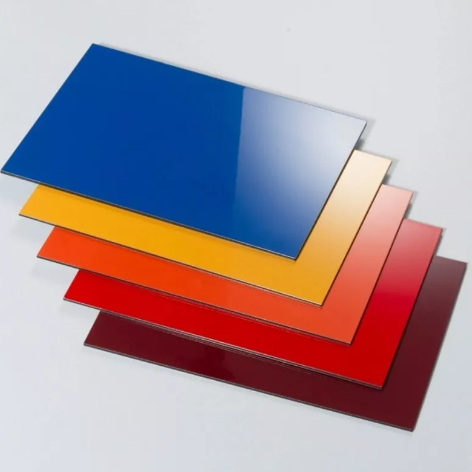
FEVE represents an alternative fluoropolymer technology. Unlike PVDF, FEVE resins can be applied as a clear coat or a solid color and cure at room temperature or under baked conditions. The distinct molecular structure provides exceptional weatherability while allowing for different aesthetic outcomes. You will often see this on automotive dealerships where brand colors must pop.
Projects requiring high gloss levels up to 90 units, vibrant color palettes, and high distinctness of image (DOI) benefit greatly from FEVE coatings. Corporate branding elements and vibrant retail facades frequently utilize this technology to achieve a specific visual impact that PVDF simply cannot match.
FEVE delivers weatherability comparable to PVDF and fully complies with AAMA 2605. It allows for brighter pigmentation and creates a tighter surface tension that facilitates easier graffiti removal. Specifiers should note that FEVE systems generally carry a higher initial material requirement compared to standard PVDF formulations.
Standard polyester (PE) resins form the basis of these economical coatings. Silicone Modified Polyester (SMP) systems reinforce the standard polyester matrix with silicone polymers to enhance UV resistance and improve overall weatherability slightly above standard PE. We use these strictly for controlled environments.
These systems perform best in interior applications, corporate signage, short-term retail facades, and protected exterior soffits. They provide excellent initial color match and smooth finishes for applications shielded from direct, aggressive weathering.
While highly cost-effective, PE and SMP coatings remain prone to rapid chalking and fading under direct UV exposure. They fail the rigorous ten-year South Florida exposure tests required by AAMA 2605. Specifying these finishes for high-exposure exterior cladding guarantees premature aesthetic failure and unhappy clients.
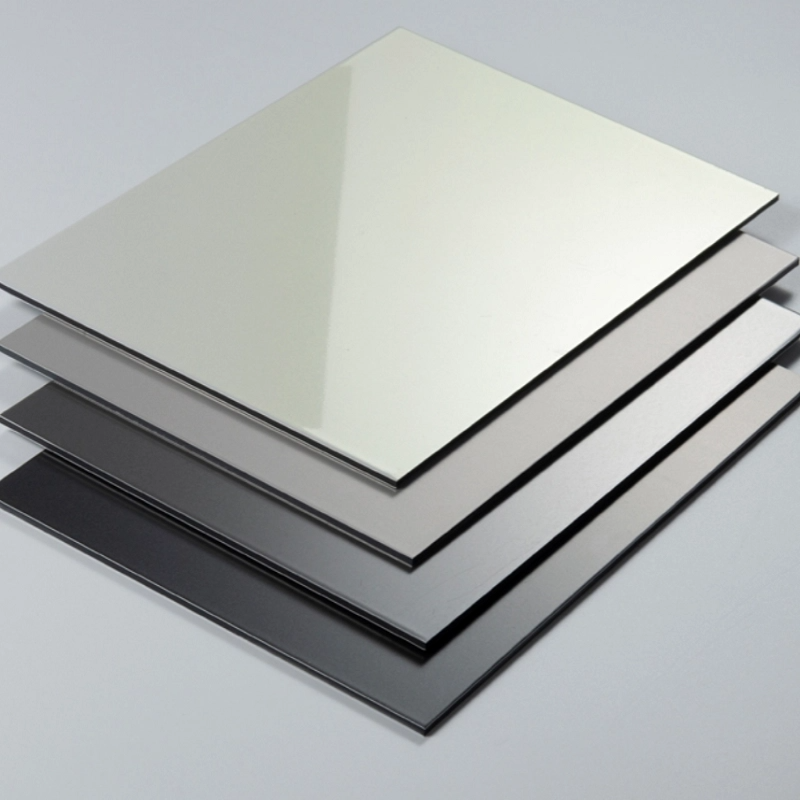
Anodizing utilizes an electrochemical process that converts the soft, ductile aluminum surface into an extremely hard, integrated aluminum oxide layer. This process alters the molecular structure of the aluminum, growing a porous oxide film that can absorb specific metallic dyes before being permanently sealed. It is a completely different approach from wet-applied paints.
High-traffic pedestrian areas, ground-floor storefronts, and transit hubs require the extreme scratch, abrasion, and wear resistance provided by anodized finishes. The hardened surface withstands physical impacts far better than any wet-applied polymeric coating. If shopping carts or luggage will hit the wall, you want anodized aluminum.
Because the finish integrates directly with the metal substrate, it cannot peel, blister, or flake. However, anodizing presents specific trade-offs. The color palette remains strictly limited to metallic tones like bronze, black, champagne, and clear. Furthermore, the electrochemical process inherently produces slight color variations between different batches of metal.
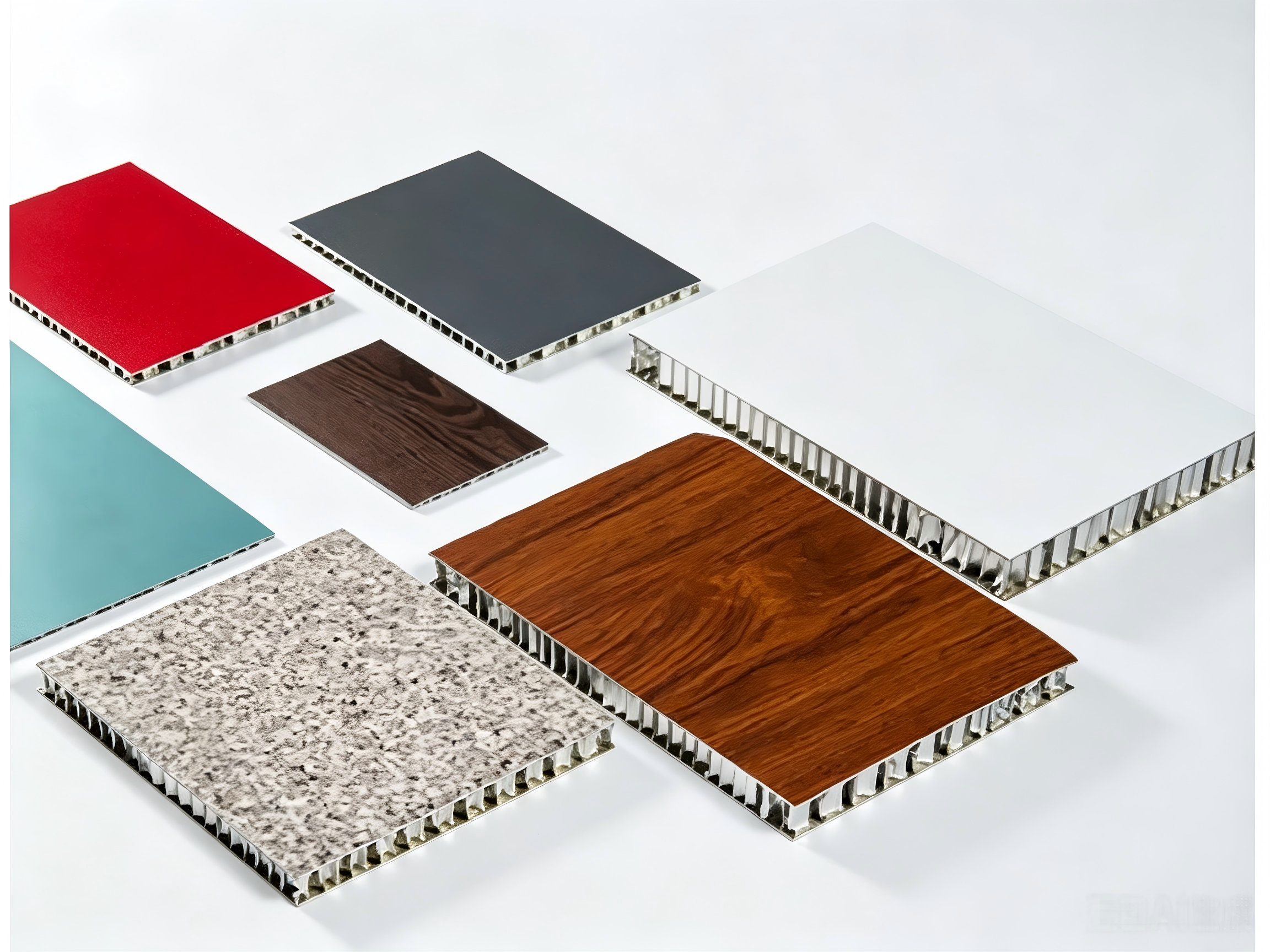
Specialty finishes encompass multi-coat systems, sublimation techniques, and specialized micas or flakes designed to mimic natural materials. These processes create convincing woodgrain textures, stone-look panels, and prismatic or color-shifting facades that change hue depending on the viewing angle. They offer architects massive design flexibility.
When evaluating decorative finishes, specifiers must rigorously assess the underlying chemistry. Ensure the clear coats and base layers utilize PVDF or FEVE resins rather than standard PE. Guaranteeing the exterior longevity matches the premium aesthetic requires confirming the entire multi-layer system meets AAMA 2605 standards.
Selecting an aluminum panel surface finish involves more than comparing appearance or purchase price. Long-term performance depends on durability, fabrication flexibility, maintenance requirements, and the environmental conditions where the panels will be installed.
Different coating systems offer different balances between upfront investment and lifecycle value. Polyester coatings generally have the lowest initial cost, while premium systems such as PVDF and FEVE require a higher investment but provide superior weather resistance and longer service life.
Rather than evaluating panel price alone, project teams should compare the total ownership cost over the expected lifespan of the façade.
| Evaluation Factor | Polyester (PE) | PVDF | FEVE |
|---|---|---|---|
| Initial Cost | Low | Medium | High |
| Weather Resistance | Moderate | Excellent | Excellent |
| Color Retention | Moderate | Excellent | Excellent |
| Maintenance Frequency | Higher | Lower | Lowest |
| Expected Exterior Service Life | 5–10 Years | 20–30 Years | 20–30+ Years |
| Best Value For | Budget projects | Commercial buildings | Premium architecture |
For long-term exterior projects, a higher-quality coating can often reduce maintenance costs enough to offset the higher purchase price.
Surface finish should also be evaluated based on how well it performs during fabrication.
ACP panels are frequently cut, routed, folded, curved, and assembled into complex façade systems. The coating must maintain adhesion throughout these fabrication processes.
| Surface Finish | Fabrication Performance | Recommended Applications |
|---|---|---|
| Polyester | Good | Standard commercial projects |
| PVDF | Excellent | Curtain walls, complex façades |
| FEVE | Excellent | Premium architectural projects |
| Anodized | Limited bending after anodizing | Flat panels and decorative elements |
Compared with anodized aluminum, fluoropolymer coatings such as PVDF and FEVE provide greater flexibility during fabrication while maintaining long-term weather resistance.
Regular maintenance helps preserve both appearance and coating performance throughout the building's service life.
Recommended maintenance practices include:
Inspect façade panels annually.
Check sealants and expansion joints.
Wash surfaces with low-pressure water.
Use neutral, non-abrasive cleaning agents.
Remove salt deposits and industrial contaminants promptly.
Follow the manufacturer's maintenance recommendations.
The required cleaning frequency depends on the installation environment.
| Environment | Recommended Cleaning Frequency |
|---|---|
| Rural Areas | Every 18–24 months |
| Urban Areas | Every 12 months |
| Industrial Areas | Every 6–12 months |
| Coastal Areas | Every 3–6 months |
Proper maintenance helps maximize coating performance while supporting long-term warranty coverage.
Besides durability, modern architectural coatings are increasingly evaluated based on sustainability, manufacturing quality, and long-term project reliability.
Factory-applied coating systems provide better consistency and environmental control than field-applied coatings.
Modern aluminum panel systems also contribute to sustainable construction through:
| Sustainability Benefit | Project Value |
|---|---|
| Recyclable aluminum | Supports circular construction |
| Factory-controlled coating | Lower VOC emissions |
| Reflective pigments | Reduced solar heat gain |
| Longer service life | Less replacement waste |
| Lower maintenance | Reduced resource consumption |
These characteristics can contribute to green building certifications and lower lifecycle environmental impact.
Color consistency is especially important for metallic, brushed, and special-effect finishes.
Panels installed in different directions may reflect light differently, causing noticeable color variation across the façade.
To improve consistency:
Use panels from the same production batch.
Follow the directional arrows on the protective film.
Maintain the same installation orientation across each elevation.
Confirm panel sequence before installation.
| Best Practice | Purpose |
|---|---|
| Same production batch | Consistent color |
| Uniform installation direction | Uniform light reflection |
| Factory layout planning | Reduced installation errors |
| Pre-installation inspection | Better visual consistency |
These practices help maintain a uniform appearance across large façade systems.
Warranty terms should be evaluated together with coating performance standards rather than warranty duration alone.
When comparing suppliers, review:
Film adhesion
Color retention
Gloss retention
Chalking resistance
Corrosion protection
Maintenance requirements
Warranty exclusions
| Evaluation Item | Why It Matters |
|---|---|
| Film Integrity | Prevents peeling and blistering |
| Color Retention | Maintains original appearance |
| Gloss Retention | Preserves visual quality |
| Chalking Resistance | Improves UV durability |
| Corrosion Resistance | Extends service life |
| Warranty Coverage | Reduces long-term project risk |
Choosing a coating system that meets recognized industry standards and is supported by a clear warranty helps reduce project risk and ensures reliable long-term façade performance.
There is no universal best finish for architectural aluminum. The optimal choice requires a calculated alignment of AAMA performance standards, localized environmental realities, and the specific architectural intent of the facade. Specifying the correct chemistry ensures the building envelope performs structurally and aesthetically for decades.
The decision matrix remains straightforward: mandate PVDF or FEVE coatings for high-exposure commercial exteriors requiring long-term UV resistance. Utilize anodized finishes for ground-level, high-traffic zones demanding extreme abrasion resistance. Reserve standard PE and SMP coatings strictly for interiors or highly protected, low-exposure applications.
Request physical draw-down samples from manufacturers to verify color and gloss under natural lighting conditions at the project site.
Review the exact warranty documentation, paying close attention to Delta E limits, chalking allowances, and coastal environment exclusions.
Consult with a dedicated facade engineer to confirm your chosen finish aligns perfectly with the structural and environmental demands of your specific site.
Establish a documented maintenance and cleaning schedule to ensure the facade remains compliant with manufacturer warranty requirements.
A: PVDF uses advanced fluoropolymer resin chemistry to provide extreme UV and weather resistance, making it suitable for 20+ year exterior lifespans. PE uses standard polyester resin, which degrades rapidly under direct UV exposure, making it suitable only for interiors or short-term exterior applications.
A: Aluminum's low density and high thermal expansion rate require flexible, elastomeric coatings that can handle constant dimensional movement. Its natural malleability requires a coating ductile enough to stretch without micro-cracking during complex panel fabrication and folding.
A: AAMA 2605 serves as the industry standard for high-performance exterior commercial cladding. It requires panels to withstand 10 years of severe South Florida exposure testing while maintaining strict limits on color fade (Delta E) and chalking.
A: High-quality 70% PVDF coatings typically carry 20- to 30-year warranties specifically for film integrity. With proper annual maintenance and cleaning, the practical lifespan of these coatings often exceeds the warranty period significantly.
A: Minor clear-coat scratches can sometimes be buffed out. However, deep scratches penetrating PVDF or baked enamel finishes require specialized air-dry touch-up paints. These field repairs rarely match the exact gloss or achieve the longevity of the original factory-baked finish.
A: Anodized panels offer superior hardness and scratch resistance because the finish integrates directly into the metal. However, painted panels using PVDF offer vastly superior color consistency, significantly wider color palettes, and much easier batch-to-batch color matching.
A: Coastal environments introduce corrosive salt spray and airborne chlorides. These projects require specialized high-build primers beneath PVDF or FEVE topcoats to prevent oxidation. Specifiers must also secure specific marine-environment warranties, as standard warranties often exclude coastal zones.


