
Views: 0 Author: Site Editor Publish Time: 2026-03-19 Origin: Site


Choosing between Aluminum Composite Panel and aluminum sheet is not always easy. Which one truly fits your project better? This guide compares their performance, cost, and design flexibility. In this article, you will learn how to select the right material for real applications.
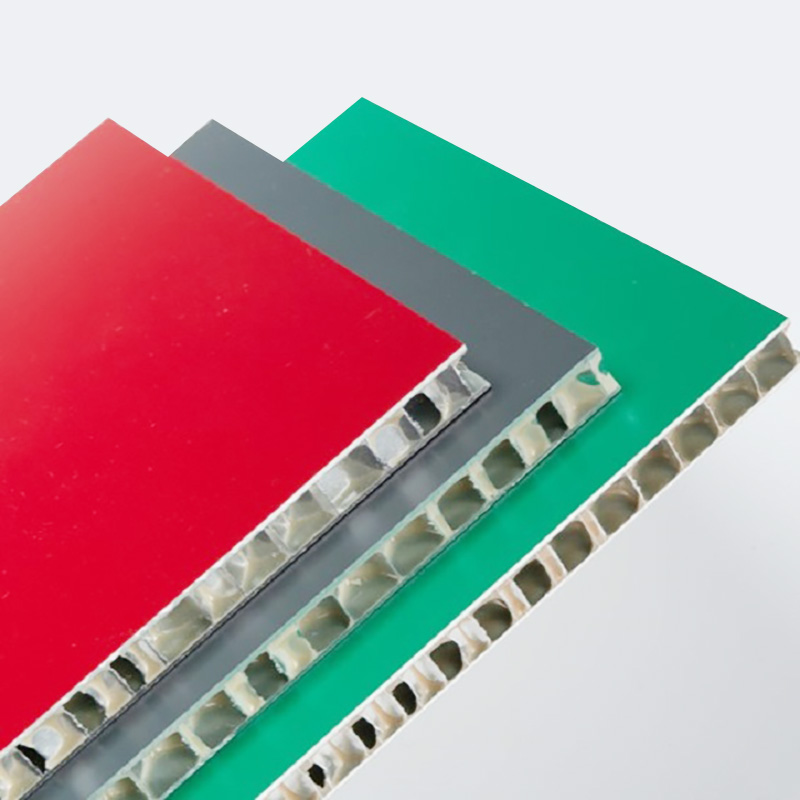
An Aluminum Composite Panel is not just a flat metal sheet. It is an engineered material built with a layered structure. It combines two thin aluminum skins and a non-aluminum core. This structure gives it both strength and flexibility at the same time. We often see it used in modern façades, signage, and interior walls because it balances performance and design very well.
The internal composition plays a big role in how it performs.Typical Aluminum Composite Panel structure:
● Top aluminum layer for protection and appearance
● Core material for insulation, flexibility, and fire performance
● Bottom aluminum layer for support and stability
To better understand the core differences, here are the most common core types used in ACP systems:
Core Type | Description | Typical Use |
PE (Polyethylene) | Lightweight and cost-effective | Signage, interior decoration |
HDPE | Higher density, improved strength | General cladding |
FR (Fire-Retardant) | Mineral-filled for fire safety | Commercial buildings |
A2 Core | Non-combustible, highest fire rating | High-rise and strict safety projects |
Because of this structure, Aluminum Composite Panel offers several practical advantages. It is easier to cut, bend, and fabricate into complex shapes. It also supports a wide range of finishes such as wood grain, metallic, or stone textures.
Aluminum sheet metal, often called alu sheets, is a solid piece of aluminum material. Unlike composite panels, it does not include any core layer. It is produced by rolling aluminum into flat sheets of varying thickness. Because it is a single material, its performance depends heavily on alloy composition and thickness.
These sheets are widely used in industries that require structural strength. You will often find them in transportation, industrial equipment, and heavy-duty construction. Their strength and durability make them suitable for environments where impact resistance and load-bearing capacity are critical.
Common characteristics of aluminum sheet metal:
● Solid metal structure with no composite layers
● Strong mechanical performance and rigidity
● Good corrosion resistance depending on alloy
● Requires additional finishing for aesthetics
Below is a simplified comparison of common aluminum sheet specifications:
Feature | Aluminum Sheet Metal |
Structure | Solid aluminum (single layer) |
Thickness Range | Typically 2–4 mm |
Common Alloys | AA1100, AA3003, 5052, 6061 |
Weight | Heavier than composite panels |
Processing | Cutting, welding, bending required |
When we compare Aluminum Composite Panel and aluminum sheet metal, weight becomes a practical factor very quickly. Aluminum Composite Panel uses a layered structure, so it reduces mass without losing functional rigidity. This makes it easier to handle on-site, especially in façade systems or large-scale cladding projects. It also reduces structural load, which matters a lot in high-rise or renovation projects.
Strength works differently. Aluminum sheet metal relies on its solid thickness, so it delivers higher impact resistance and load-bearing capacity. However, in most architectural scenarios, we do not need extreme strength. We need balance. Aluminum Composite Panel provides enough rigidity for cladding while allowing easier shaping and installation. This is why it is often preferred in projects where design flexibility and efficiency are more important than raw strength.
Durability is not only about strength. It is about how materials perform over time in real environments. Aluminum Composite Panel uses surface coatings such as PE or PVDF, which act as a protective layer against UV radiation, rain, and chemical exposure. These coatings help maintain color stability and surface integrity for years, even in outdoor conditions.
Aluminum sheet metal also has natural corrosion resistance, especially when using high-quality alloys. However, without additional treatment, its surface can oxidize or lose appearance over time. That means extra finishing steps are often required if visual consistency is important.
● ACP panels resist fading and weather damage because of coated surfaces. This makes them suitable for exterior walls and signage exposed to sunlight and rain.
● Aluminum sheets depend more on alloy composition and post-treatment. They may need anodizing or painting to achieve similar durability in outdoor use.
● In harsh climates, such as coastal or industrial zones, coated Aluminum Composite Panel performs more consistently in terms of appearance and maintenance.
Fire performance is a key factor in material selection, especially for commercial buildings. Aluminum sheet metal is naturally non-combustible. It does not burn or release smoke, which makes it reliable in high-temperature environments. This gives it an advantage in applications where basic fire resistance is required.
Aluminum Composite Panel offers more flexible fire solutions. Its performance depends on the core material. Standard PE cores are less resistant, but fire-retardant (FR) and A2 cores are designed to meet strict fire safety standards. These cores use mineral fillers to reduce flame spread and smoke generation.
● Aluminum Composite Panel can be engineered for different fire ratings. This allows it to meet building codes for various project types, including high-rise buildings.
● Aluminum sheet metal provides inherent fire resistance due to its solid structure. However, it does not offer additional insulation or controlled fire behavior like layered systems.
● In modern construction, fire-rated ACP is widely used because it balances safety, insulation, and design flexibility in one material system.
Thermal performance is where Aluminum Composite Panel shows a clear advantage. Its core material acts as a barrier, reducing heat transfer between surfaces. This helps improve energy efficiency and indoor comfort. It also supports better temperature control, especially in buildings exposed to strong sunlight.
Aluminum sheet metal behaves differently. It is a good conductor of heat, so it transfers temperature quickly. On its own, it does not provide insulation. To achieve similar performance, additional insulation layers are required, which increases both cost and installation complexity.
● Aluminum Composite Panel improves energy efficiency by reducing heat transfer. It helps maintain stable indoor temperatures and reduces energy consumption over time.
● Aluminum sheet metal requires additional insulation systems to achieve the same effect. This adds complexity to the design and construction process.
● The layered structure of ACP also helps reduce noise transmission slightly, making it more suitable for urban environments where sound control is needed.
When we talk about modern architecture, design freedom becomes a key factor. This is where Aluminum Composite Panel stands out clearly. It offers a wide range of finishes, textures, and colors, allowing designers to create visually striking surfaces. From wood grain to metallic shine, it adapts easily to different design styles, whether minimal or decorative.
Unlike solid aluminum sheets, which often require additional surface treatments, ACP panels come ready with decorative coatings. These coatings not only enhance appearance but also improve durability. This combination makes Aluminum Composite Panel a preferred choice for façades, interiors, and branding elements.
● Aluminum Composite Panel supports finishes like wood, stone, mirror, brushed metal, and solid colors. These finishes allow designers to match different architectural styles without changing materials. It simplifies material selection and improves design consistency across projects.
● It allows custom colors and patterns. This makes it ideal for brand identity, signage, and creative façades. Designers can achieve unique visual effects without complex processing.
● Aluminum sheet metal has more limited visual options. It usually requires anodizing or coating to achieve decorative effects, which increases processing steps and cost.
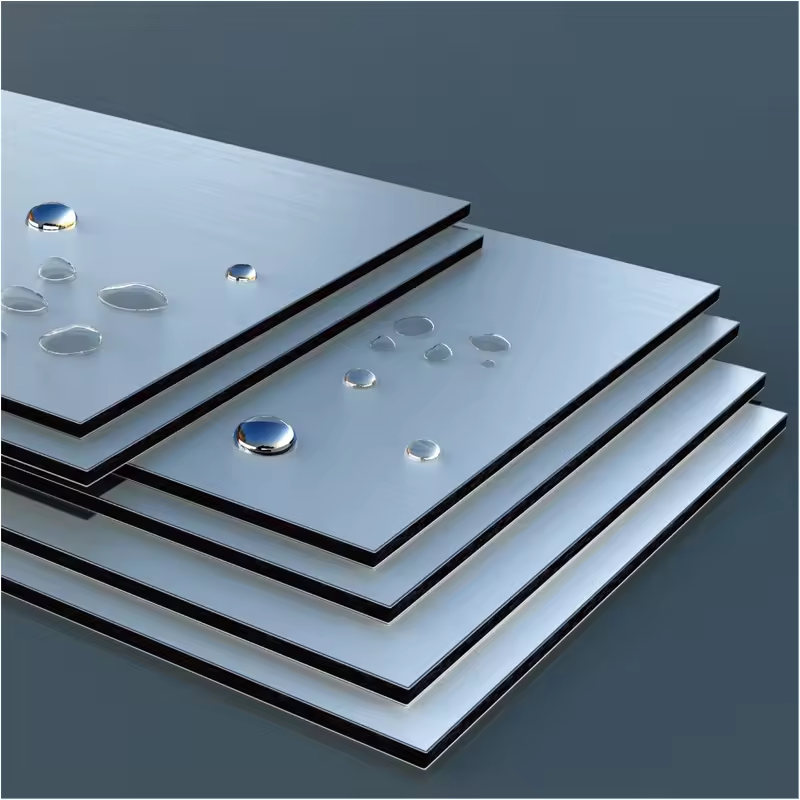
Fabrication is not just about cutting material. It affects how efficiently a project moves from design to construction. Aluminum Composite Panel is designed for easy processing. Its layered structure allows clean cutting, smooth bending, and precise shaping. This makes it suitable for both simple panels and complex architectural forms.
Aluminum sheet metal behaves differently. Because it is solid, it requires more force and specialized equipment for bending or shaping. Welding and grinding are often needed, which increases labor time and complexity. This difference becomes very clear in projects that involve curved surfaces or detailed fabrication.
● Aluminum Composite Panel can be easily routed, folded, and bent into shapes without cracking. This allows faster fabrication and reduces material waste. It also supports on-site adjustments when needed.
● Aluminum sheet metal requires more intensive processes such as welding, grinding, and heavy bending. These steps increase production time and require skilled labor.
● ACP panels can be processed both in factory and on-site. This flexibility improves construction efficiency, especially when design changes occur during installation.
Installation efficiency often determines the overall success of a project. Aluminum Composite Panel offers a clear advantage here due to its lightweight structure. It reduces handling difficulty, speeds up installation, and lowers labor requirements. This is especially important in high-rise buildings or large façade systems.
Aluminum sheet metal, being heavier, requires more support during installation. It increases structural load and often demands additional reinforcement. This can slow down construction and increase overall project cost.
When we look at cost, it is not only about the price per square meter. It is about the full lifecycle. Aluminum Composite Panel usually costs less than solid aluminum sheet metal because it uses less aluminum material. Its composite structure reduces raw material consumption while still maintaining performance suitable for most architectural uses.
However, the real advantage appears during installation and long-term use. ACP panels are lighter, so they reduce transportation costs and labor requirements. They also simplify installation, which shortens project timelines and lowers labor expenses. Aluminum sheet metal, in contrast, often requires more support, more handling effort, and sometimes more complex processing before installation.
Cost Factor | Aluminum Composite Panel | Aluminum Sheet Metal |
Material Cost | Lower (less aluminum used) | Higher (solid metal) |
Installation Cost | Lower (lightweight, easy handling) | Higher (heavier, complex) |
Transportation | Cost-efficient | Higher due to weight |
Maintenance | Low maintenance | Moderate, may need recoating |
Choosing the right material often depends on how it will be used. Aluminum Composite Panel is widely used in architectural and decorative applications. Its lightweight nature and design flexibility make it ideal for modern building exteriors and interiors. Aluminum sheet metal, on the other hand, is more common in industrial and structural environments where strength is the main concern.
ACP panels are often selected when visual quality and efficiency are important. They allow large surface coverage without adding excessive load. Their ability to support various finishes also makes them suitable for branding and decorative projects.
Sustainability is becoming an important factor in material selection. Both Aluminum Composite Panel and aluminum sheet metal are recyclable, which makes them suitable for environmentally conscious construction. Aluminum itself can be reused many times without losing its properties, which reduces the need for new raw materials.
Aluminum Composite Panel offers additional advantages in energy efficiency. Its core layer helps reduce heat transfer, which can improve building insulation performance. This reduces energy consumption over time, especially in large buildings exposed to varying temperatures.
● Aluminum Composite Panel reduces energy use during transportation because of its lighter weight. It also supports better thermal performance in buildings, which helps lower energy demand.
● Aluminum sheet metal is fully recyclable and durable. However, it does not provide insulation, so additional materials are often needed to improve energy efficiency.
● In modern construction, combining recyclable materials with energy-saving performance is becoming a key requirement. ACP panels meet both needs in a single solution.
Selecting the right material depends on project priorities.
● Lightweight materials, design flexibility, and cost efficiency
Choose Aluminum Composite Panel when you need lightweight materials, design flexibility, and cost efficiency. It works well in projects where visual impact and installation speed are important.
● Structural strength, impact resistance, or heavy-duty performance
Choose aluminum sheet metal when structural strength, impact resistance, or heavy-duty performance is required. It is more suitable for industrial or mechanical applications.
● Long-term performance
Consider long-term performance, not just initial cost. In many cases, ACP panels provide better overall value because they reduce both installation and maintenance efforts.
Aluminum Composite Panel offers light weight, flexible design, and lower cost. Aluminum sheets provide higher strength for heavy use. For most projects, ACP gives better balance and efficiency. MC BOND delivers reliable Aluminum Composite Panel solutions with stable quality, strong performance, and flexible applications for modern construction.
A: Aluminum Composite Panel is used for façades, signage, and interior design.
A: Yes, Aluminum Composite Panel usually costs less and reduces installation expenses.
A: Aluminum sheet is stronger, but Aluminum Composite Panel is sufficient for most buildings.
A: Aluminum Composite Panel is lightweight, so it speeds up installation and lowers labor cost.
A: Choose Aluminum Composite Panel when you need design flexibility and cost efficiency.


