
- All
- Product Name
- Product Keyword
- Product Model
- Product Summary
- Product Description
- Multi Field Search
 English English
Views: 0 Author: Site Editor Publish Time: 2026-07-09 Origin: Site


Architectural cladding decisions dictate the long-term structural integrity, aesthetic longevity, and maintenance overhead of a building's facade. Specifying the wrong surface finish for an Aluminum Composite Panel (ACP) or Aluminum Composite Material (ACM) leads to premature chalking, UV degradation, batch-to-batch color mismatch, or failure under harsh environmental conditions. These failures result in extensive remediation work and project delays. Evaluating the fundamental differences between the electrochemical integration of anodized finishes and the surface adhesion of painted coatings is necessary for matching material performance to specific project requirements. Understanding how Anodized Aluminum Composite Panels compare to traditional painted options ensures your facade withstands environmental stressors and daily wear. You must align the surface technology with the specific exposure risks, fabrication demands, and aesthetic tolerances of your site to guarantee a successful installation.
Table of Contents
Structural Integration vs. Surface Adhesion: Anodized Aluminum Composite Panels feature an aluminum oxide layer that is electrochemically grown from the base metal, making it immune to peeling or blistering, unlike applied liquid or powder paints.
Durability and Hardness: Anodized finishes offer superior surface hardness (often compared to sapphire on the Mohs scale), providing exceptional scratch and abrasion resistance in high-traffic areas compared to standard painted ACP.
Aesthetic Limitations and Color Control: While painted ACP offers infinite custom color matching and strict Delta E control, anodizing is limited to metallic tones (clear, bronze, black) and is subject to natural batch-to-batch structural variations.
Fabrication Realities: Anodized panels require specific routing and folding considerations, as the rigid oxide layer can micro-fracture (craze) at tight bend radii, a limitation less prevalent in flexible PVDF coatings.
Composite vs. Solid Veneer: While solid aluminum veneer panels offer high fire safety, anodized and painted ACPs provide superior flat-panel structural performance, vibration damping, and cost-efficiency over large spans.

The anodic oxidation process converts the raw aluminum surface into a highly durable, corrosion-resistant aluminum oxide finish. Unlike paints or films, this finish integrates structurally with the aluminum skin. It grows directly from the base metal through an electrochemical bath. You cannot peel, flake, or blister an anodized layer because it is part of the aluminum itself. Standard architectural anodizing specifications fall into Class I and Class II anodic coatings. Class I offers a thicker oxide layer (minimum 0.7 mils) suitable for exterior high-wear environments. Class II provides a thinner layer (minimum 0.4 mils) reserved for interior applications or less demanding exterior zones. The process requires precise control over bath temperature, voltage, and immersion time to achieve the desired oxide thickness and pore structure.
Fabricators submerge the aluminum coils in an acid electrolyte bath and pass an electric current through the medium. A cathode mounts to the inside of the anodizing tank. The aluminum acts as an anode. Oxygen ions release from the electrolyte to combine with aluminum atoms at the surface of the part being anodized. This creates the anodic layer. The resulting surface is highly porous at a microscopic level. Manufacturers then seal these pores using a hydrothermal process, locking in the finish and preventing dirt or contaminants from penetrating the metal.
Painted composite panels rely on continuous coil coating processes. Manufacturers apply liquid paint to large rolls of aluminum before bonding them to the core material. Polyvinylidene Fluoride (PVDF) serves as the industry standard for exterior architectural panels. It offers excellent weatherability and color retention. Fluoroethylene Alkyl Vinyl Ether (FEVE) provides higher gloss levels and similar durability, often used when vibrant, high-gloss finishes are necessary. Polyester (PE) paint systems are softer and less UV-resistant. Builders use PE primarily for interior applications, short-term signage, or temporary hoardings.
Painted systems require specialized primers and adhesion layers to ensure the polymer coating sticks permanently to the aluminum substrate. The coil coating line cleans, treats, primes, paints, and bakes the aluminum in a single continuous operation. This ensures a uniform coating thickness across the entire coil. The quality of the pre-treatment directly dictates the long-term adhesion of the paint. If the chemical conversion coating fails, the paint will eventually delaminate under UV exposure and thermal cycling.
Aluminum Composite Panel (ACP) and Aluminum Composite Material (ACM) are interchangeable terms. They describe a multi-layered system featuring two thin aluminum skins bonded to a central core. This composite sandwich structure differs significantly from solid aluminum sheet or veneer panels. Composite panels offer superior weight-to-stiffness ratios. They resist oil-canning vulnerabilities that frequently plague large, flat solid metal sheets. A 4mm composite panel provides the same rigidity as a 3.3mm solid aluminum sheet but weighs significantly less.
Fabrication processes also differ fundamentally. You can route and fold composite panels easily on-site using standard woodworking tools. Solid aluminum requires heavy press-braking equipment and welding. The composite core acts as a vibration dampener, reducing wind noise on high-rise facades. Solid aluminum panels ring and vibrate under heavy wind loads unless heavily reinforced with welded stiffeners.
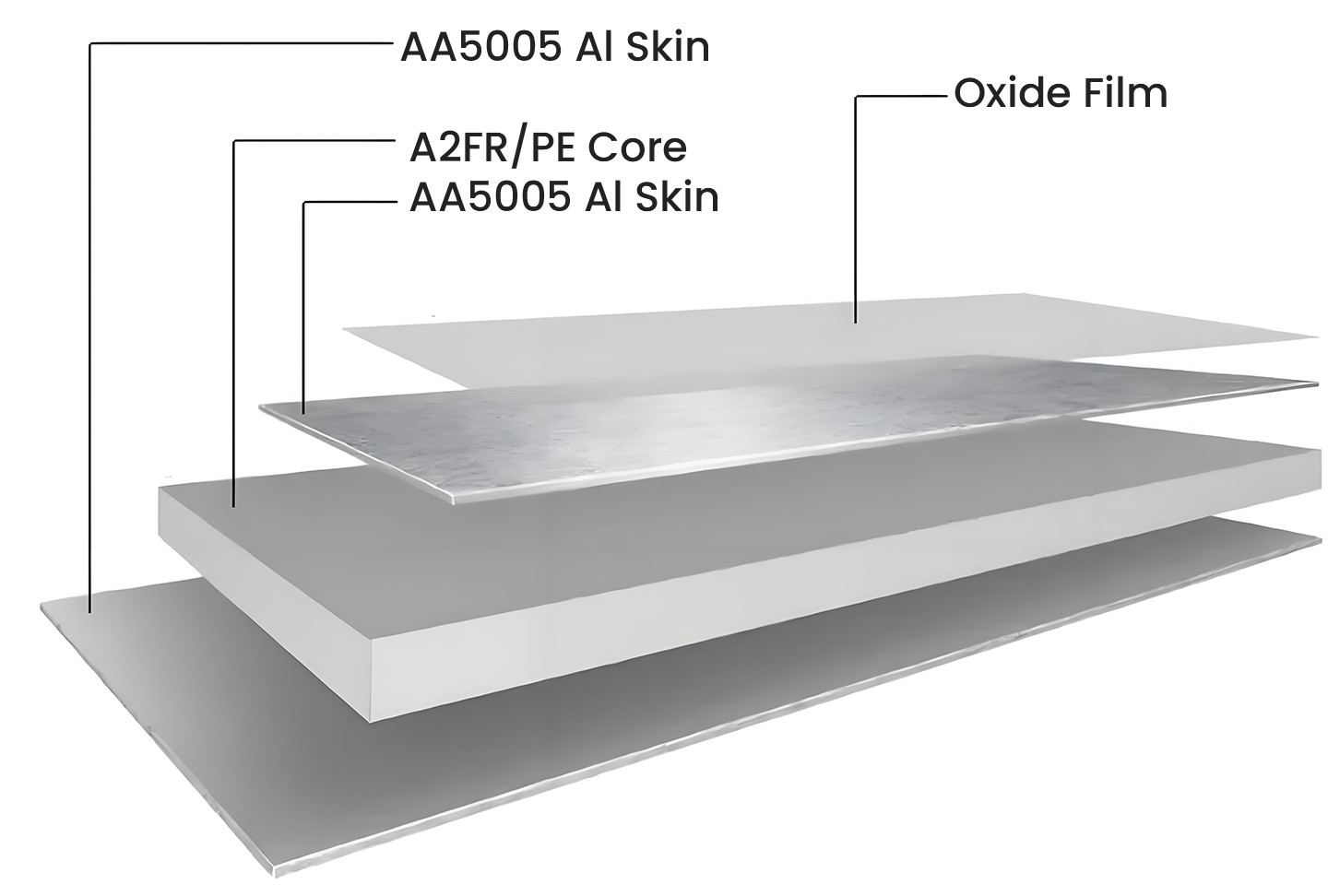
The Mohs hardness of an anodic oxide layer approaches that of a sapphire. It vastly outperforms any cured polymer paint. This exceptional hardness translates directly to impact resistance. Ground-level facades, public transportation hubs, and high-traffic architectural applications benefit immensely from this toughness. Anodized surfaces resist gouging and physical deformation during handling and installation. You can drag a key across an anodized panel with minimal visible damage.
Painted panels, even those coated with high-performance PVDF, remain susceptible to scratching from scaffolding, tools, or pedestrian contact. The organic polymer layer is inherently softer than the aluminum oxide. When a painted panel scratches deeply, it exposes the raw aluminum underneath, creating a focal point for oxidation and potential coating failure. Anodized panels maintain their structural integrity even when subjected to abrasive cleaning methods or blowing sand in arid environments.
Inorganic anodized finishes naturally resist UV degradation. They do not chalk, fade, or degrade under intense sunlight. The color comes from inorganic metallic salts deposited into the pores of the aluminum oxide before sealing. These salts do not break down under ultraviolet radiation. High-performance PVDF paints must meet stringent AAMA 2605 standards to ensure long-term color retention and chalk resistance. However, organic paints will eventually show signs of weathering over decades. The polymer binders break down, leading to a chalky residue on the surface.
In coastal or high-salinity environments, anodizing must comply with AAMA 611 standards. The thick oxide layer provides an impenetrable barrier against salt spray. Painted panels rely on the integrity of their clear coats and primers to prevent filiform corrosion. If a scratch penetrates the paint down to the raw aluminum, salt water can migrate under the coating, causing it to blister and peel away from the substrate.
Painted ACP offers highly predictable color consistency. The custom color-matching pipeline utilizes laboratory spectrographic analysis. Manufacturers achieve strict Delta E tolerances across massive production runs. You can match brand colors perfectly. If a corporate client requires a specific Pantone shade, the coil coater formulates the exact resin and pigment mixture to achieve it. This consistency remains stable from the first panel to the ten-thousandth panel.
Anodizing involves inherent variables. Alloy grain structure, bath temperature, chemistry, and immersion time all influence the final appearance. This leads to natural, structural color variations known as the "living finish" effect. Managing expectations on anodized projects requires establishing "range samples." These physical samples define the acceptable light-to-dark limits prior to full-scale production. You cannot expect uniform, monolithic color from an anodized facade. The panels will shift in tone depending on the viewing angle and lighting conditions.
Surface finishes interact differently with Fire-Retardant (FR) and non-combustible (A2) mineral cores. The anodic oxide layer is extremely thin and completely non-combustible. It contributes zero fuel to a fire. Organic polymer-based paint systems like PVDF and PE are combustible. During standard fire testing, such as NFPA 285 or EN 13501-1, the paint layer can ignite and contribute to flame spread, albeit minimally.
Specifying anodized panels on A2 cores provides the highest possible fire safety rating for a composite cladding system. The entire assembly, from the surface finish to the core, resists ignition. When evaluating painted panels, fire engineers must calculate the calorific value of the paint layer and include it in the overall fire load of the facade assembly.
Performance Metric | Anodized ACP (Class I) | Painted ACP (PVDF) |
|---|---|---|
Surface Hardness | Mohs 8-9 (Sapphire equivalent) | Mohs 2-3 (Polymer equivalent) |
UV Degradation | Zero chalking or fading | Gradual chalking over 20+ years |
Color Matching | Limited to metallic salts (Bronze, Black, Clear) | Infinite custom colors (Pantone/RAL) |
Batch Consistency | Visible variation (Range samples required) | Strict Delta E control (< 1.5 variation) |
Combustibility | Non-combustible surface | Combustible organic layer |
Field Repairability | Impossible to touch up | Air-dry fluoropolymer touch-up available |
Batch-anodized or continuous-coil anodized aluminum skins carry distinct cost premiums over standard painted finishes. The electrochemical process requires significant energy and specialized handling. Architectural anodizing demands specific, high-quality alloy grades. The 5005 alloy series is standard, as it provides the consistent grain structure necessary for an even anodic coating. Standard 3000 series alloys used for painted panels often show streaks and structural defects when anodized. This strict alloy requirement impacts raw material procurement costs.
High-volume PVDF or PE painted ACP production runs achieve significant economies of scale. Coil coaters process thousands of meters of aluminum per hour. The continuous nature of the painting process reduces labor and energy overhead per square meter. Anodizing, particularly batch anodizing, involves dipping individual sheets into tanks, which drastically reduces throughput and increases unit costs.
Project managers must weigh the trade-offs of ordering factory-custom cut-to-size panels versus purchasing standard sheets for on-site fabrication. CNC routing, punching, and perforating behave differently depending on the finish. The extreme hardness of an anodized surface accelerates tool wear. Processing times increase compared to routing softer painted coatings. Fabricators must use specialized carbide or diamond-tipped tooling to maintain clean edges and prevent premature equipment degradation.
Select single-flute upcut router bits designed specifically for hard aluminum.
Reduce spindle speed and increase feed rate to prevent heat buildup and melting of the composite core.
Apply a continuous mist coolant system to lubricate the bit and clear chips from the routing channel.
Inspect tooling edges after every 50 panels to ensure clean cuts and prevent micro-fracturing of the anodic layer.
Cleaning protocols differ significantly. Anodized surfaces are highly sensitive to extreme pH levels. Highly acidic or alkaline building washes will permanently etch and ruin the anodic layer. Cleaners must use pH-neutral solutions. PVDF coatings offer robust chemical resistance and tolerate a wider range of cleaning agents. You can remove graffiti from PVDF panels using harsh solvents without damaging the underlying paint.
Repairability dictates long-term maintenance strategies. You cannot touch up an anodized finish in the field. Scratches are permanent. If a panel sustains heavy damage, you must replace the entire unit. Painted ACP allows for localized repairs using color-matched air-dry fluoropolymer touch-up paints. While the touch-up paint will weather differently than the factory-baked finish over time, it provides a viable short-term aesthetic fix.
The paint coil-coating process generates Volatile Organic Compounds (VOCs). Modern facilities utilize thermal oxidizers and solvent capture protocols to mitigate these emissions, burning off the solvents to fuel the curing ovens. The electrochemical anodizing process consumes substantial electrical energy. It also requires heavy metal usage and rigorous wastewater treatment to neutralize acidic bath runoff before discharge into municipal systems.
Both material types offer cradle-to-cradle recyclability. Facilities separate the aluminum skins from the composite cores using mechanical shredding and density separation techniques. They melt down the aluminum for reuse and repurpose the polyethylene or mineral cores for lower-grade manufacturing cycles. Anodized aluminum recycles slightly easier because it lacks the organic polymer layer that must burn off during the smelting process.
The rigid anodic layer presents specific fabrication risks. Crazing, or micro-cracking, frequently occurs along the fold lines during routing and bending. The oxide layer cannot stretch. When you fold the panel 90 degrees, the anodic layer fractures along the radius. To mitigate this risk, architects must specify larger bend radii. Utilizing continuous-coil anodized skins engineered for improved ductility helps minimize visible crazing.
Fabricators must optimize their routing depth. Leaving an adequate aluminum backing layer (typically 0.3mm to 0.5mm) ensures the fold maintains structural integrity without over-stressing the brittle surface finish. If the router cuts too deep, the aluminum skin will snap during the folding process. If it cuts too shallow, the fold will require excessive force, leading to severe crazing and potential delamination of the core.
Applying field paint, spray paint, or corporate graphics over untreated ACP leads to delamination and poor adhesion. The factory finishes repel environmental contaminants, which also repels new paint. Mitigation requires adhering to strict surface preparation guidelines. Installers must perform light sanding, solvent-wipe degreasing, and apply specialized etching primers before applying any field-applied exterior coatings or vinyl films.
Anodized surfaces are particularly non-porous and require aggressive chemical etching to achieve any mechanical bond with aftermarket paints. You must break the seal of the anodic layer to allow the primer to bite into the aluminum. This process is labor-intensive and voids all manufacturer warranties regarding surface finish performance.
Dissimilar metal corrosion threatens facade integrity when installing panels with incompatible structural framing or steel fasteners. Moisture acts as an electrolyte, accelerating the degradation of the aluminum. Mitigation involves specifying stainless steel fasteners or utilizing isolated fastening systems. Installers must use elastomeric washers to separate the metals physically.
Understanding the dielectric insulation properties of a well-maintained anodic layer helps, but physical isolation remains the most reliable method to prevent galvanic corrosion. Never use zinc-plated or galvanized steel fasteners in direct contact with aluminum composite panels, regardless of the surface finish. The zinc will sacrifice itself rapidly, leading to rust streaks and eventual fastener failure.
Active construction sites present severe chemical hazards. Alkaline runoff from wet mortar, concrete dust, or plaster wash causes irreversible chemical etching on anodized finishes. The high pH dissolves the aluminum oxide instantly, leaving permanent white streaks and pitting on the surface. Painted panels resist this alkaline attack slightly better, but prolonged exposure will still dull the clear coat.
To mitigate this risk, specify heavy-duty, UV-stable strippable protective films. Implement strict site-protection protocols. Leave the protective films in place until all wet trades have completely exited the zone and the building exterior is ready for final inspection. Ensure the protective film is removed within the manufacturer's specified timeframe (usually 3 to 6 months) to prevent the adhesive from baking into the panel surface under UV exposure.
Specify anodized ACP for projects prioritizing raw metallic depth, structural expression, and ultimate lifespan under high-wear conditions. Museums, transit stations, and monumental civic buildings benefit from the authentic metallic aesthetic that only true anodizing provides. The living finish interacts dynamically with changing sunlight, giving the building a sense of permanence and material honesty.
Specify painted ACP for projects requiring precise color matching for corporate branding. Retail chains, vibrant commercial facades, and designs featuring complex, tightly folded architectural geometries rely on the flexibility and color consistency of PVDF coatings. When a brand identity demands a specific shade of red across hundreds of locations, painted ACP is the only viable solution.

The signage and fine art industries frequently utilize PE-core painted ACP as a rigid, ultra-flat support structure. It provides an excellent canvas for mounting or direct application. Direct digital printing and screen printing require specific surface tensions. Adhesion is highly reliable on polyester (PE) painted surfaces.
Anodized surfaces reject most standard printing inks without specialized pre-treatments, making painted panels the default choice for graphic-intensive applications. Industrial enclosures benefit from the scratch resistance of anodized panels, particularly in manufacturing environments where equipment frequently bumps against the paneling.
Request physical range samples of anodized finishes to establish acceptable color variation limits before approving production runs.
Specify AAMA 2605 compliance for painted panels or AAMA 611 compliance for anodized panels in your architectural tender documents.
Mandate the use of stainless steel fasteners and elastomeric isolators in the installation shop drawings to prevent galvanic corrosion.
Implement a strict site protocol requiring the retention of UV-stable protective films until all wet trades complete their work.
A: Yes, but it requires extensive surface preparation. The anodic layer is extremely hard and non-porous. You must aggressively sand the surface, clean it with a solvent degreaser, and apply a specialized etching primer. Without this preparation, aftermarket paints will quickly delaminate and peel.
A: Generally, yes. The electrochemical anodizing process requires significant energy and specialized handling. Furthermore, architectural anodizing demands premium, highly consistent aluminum alloys like the 5005 series. These factors create a cost premium compared to the high-volume coil-coating process used for PVDF painted panels.
A: True inorganic architectural anodized finishes (Class I or II) do not fade or chalk like organic paints. They offer exceptional UV stability. However, poor-quality anodizing that utilizes cheap organic dyes instead of inorganic metallic salts can bleach and lose color over time.
A: There is no functional difference. Aluminum Composite Panel (ACP) and Aluminum Composite Material (ACM) are industry-standard interchangeable terms. Both describe the exact same product: two thin aluminum skins bonded to a central mineral or polymer core.
A: You must use strictly pH-neutral cleaners and soft sponges or cloths. Highly acidic or alkaline solutions, often used in heavy-duty masonry cleaners, will instantly and permanently etch the anodic layer. Rinse the panels thoroughly with clean water to remove any residual dirt or cleaning agents.


